
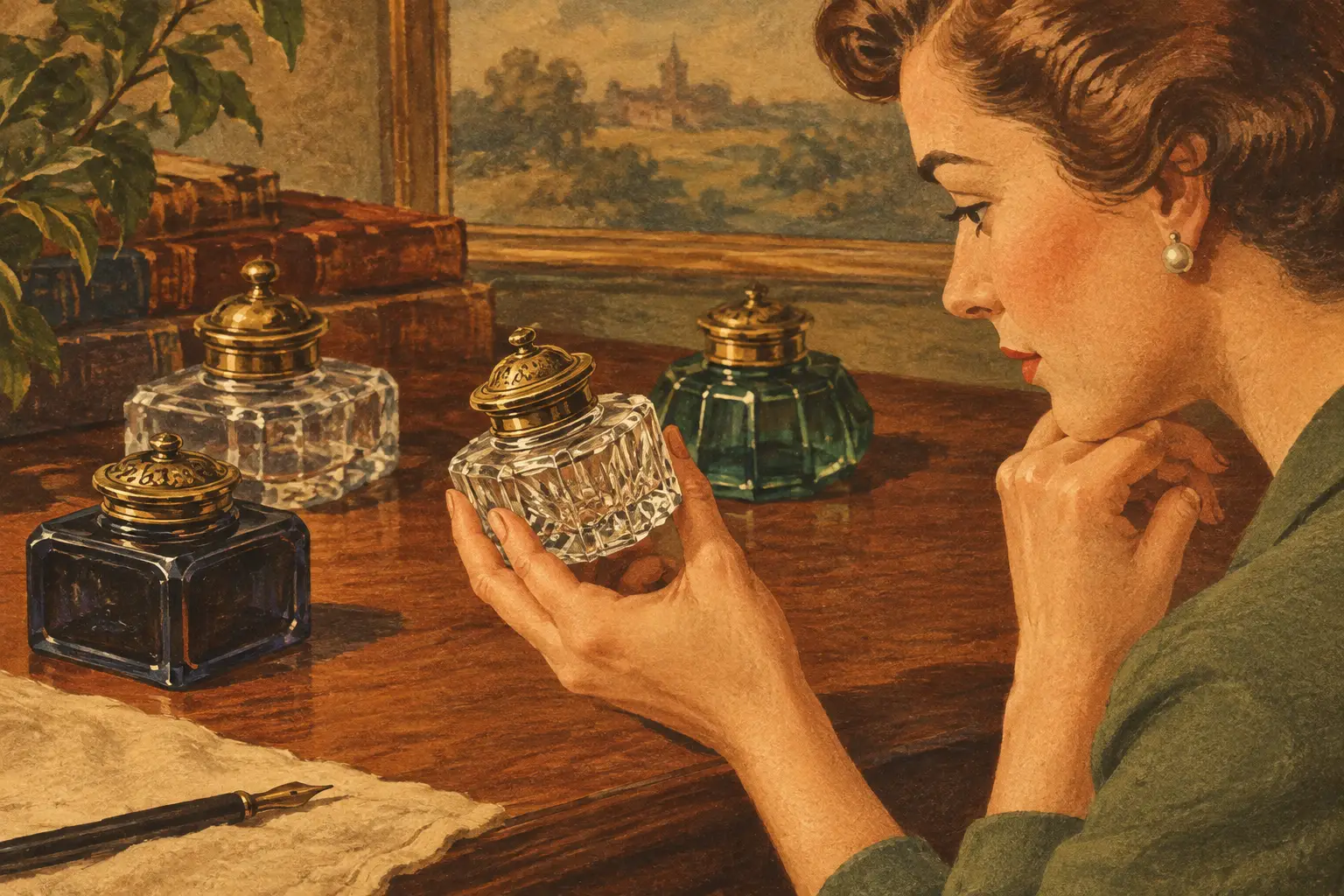
A well-chosen inkwell changes the feel of a writing desk before a pen has touched the page. Antique inkwells carry the small signs of their former lives: a softened brass lid, a crisp maker’s mark beneath a glass reservoir, or the gentle wear around a hinge that has been opened thousands of times. For collectors of fountain pens, dip pens and Victorian desk accessories, they are not merely decorative objects. They are the practical centrepiece of a writing ritual.
The best examples reward close inspection. Material, construction, completeness and condition all influence value, while the right choice depends on whether the inkwell is intended for display, regular use, or to complete a period desk set. A handsome piece may be affordable because its original liner is missing; another may command more because every component, from the porcelain pot to the pen-rest, survives as it left the maker.
Why Antique Inkwells Still Belong on a Writing Desk
Before cartridge pens and bottled fountain pen ink became commonplace, the inkwell was an essential working object. It had to keep ink available while limiting spills, dust and evaporation. Makers solved that modest engineering problem in remarkably varied ways, producing everything from plain pressed-glass wells to elaborate silver-mounted desk stands, novelty ceramic forms and finely cast brass examples.
That variety gives antique inkwells their enduring appeal. A Victorian glass inkwell can bring clarity and restraint to a mahogany desk, while an Arts and Crafts hammered pewter piece has a more architectural, handmade presence. Edwardian desk sets often favour balanced symmetry, with twin wells flanking a central pen rest or blotter. By the 1920s and 1930s, chrome, Bakelite and coloured glass introduced a sharper, more modern line.
For the writing enthusiast, an inkwell also provides useful context for a dip pen collection. Victorian nibs and holders were made to work with these objects, not to sit in isolation. Pairing an appropriate holder, nib and inkwell gives a collection a sense of purpose and makes the history of writing more tangible.
Materials That Matter
Glass is among the most familiar materials, and for good reason. It is chemically resistant to most inks, easy to clean and available in countless forms. Look for heavy moulded glass, hand-cut facets, ribbed sides, cranberry or amethyst colouring, and clear inserts housed within a metal or wooden stand. Small bubbles, pontil marks and slight irregularities can support the character of an older hand-finished piece, though they should not be confused with damage.
Ceramic and porcelain inkwells range from simple utilitarian pots to hand-painted decorative examples. Condition is especially important here. Hairline cracks, restoration, crazing and chips around the rim can affect both value and safe use. Crazing is not always a reason to reject an inkwell intended for display, but it may allow ink to penetrate the body and cause staining if the piece is put back into service.
Brass, bronze, pewter and silver-plated inkwells offer weight and visual warmth. They often appear as part of a desk stand with a tray, pen rests and one or two removable glass liners. Patina is usually desirable when it is even and honest. Over-polishing can erase fine detail and leave a surface looking unconvincing. On silver plate, watch for wear exposing the base metal at corners and raised decoration. This does not automatically make a piece undesirable, but it should be reflected in its price.
Wooden desk stands deserve careful attention. Walnut, oak, mahogany and rosewood examples can be beautifully made, but wood reacts to changing humidity and past ink spills. Check for lifting veneers, splits around fittings, loose feet and dark staining inside the well apertures. A stable, well-preserved stand is often more difficult to find than a loose glass inkwell.
Originality Is Often Found in the Small Parts
An antique inkwell is more collectable when it remains complete, particularly where the design relies on removable components. Glass liners, inner covers, brass collars, ceramic pots, hinged lids and pen rests are all commonly lost over decades of use. A replacement liner can make a desk set presentable and usable, but it is not the same as an original fitted component.
This is where measurements matter. A liner should sit properly rather than wobble in its housing, and a lid should close without forcing the glass beneath it. On double inkwells, compare the two pots for height, shape and colour. Near matches are often later substitutes. The same applies to brass lids: differences in patina, thread size or fit may reveal that components have been assembled from separate pieces.
Maker’s marks can add confidence, although many quality inkwells were never signed. Look underneath the base, inside lids and on metal mounts. British makers of desk accessories, silversmiths and retailers often used stamps that are easy to miss under old polish or felt. Hallmarks on silver pieces can be especially helpful for dating, but a hallmark alone does not guarantee that every part of the object belongs together.
A convincing object should make sense as a whole. The liner, mount, lid and base ought to show compatible age and wear. If a supposedly Victorian brass stand holds a bright modern glass pot with a machine-perfect profile, caution is sensible.
Condition: Patina Is Not Damage
Collectors sometimes face two unhelpful extremes: an inkwell polished until every trace of age has gone, or one described as “original condition” when it is structurally compromised. The right standard lies between them. Gentle age-related wear is part of the appeal; damage that threatens stability, usability or originality is another matter.
When examining a piece, hold it level and assess the practical details. Does it sit flat? Does the lid hinge move freely? Is the glass free from cracks, chips and cloudy internal residue? Does a wooden base feel sound? If an inkwell has a fitted lid, does it close cleanly without scraping or placing pressure on the liner?
Ink staining is common and can be quite attractive, particularly in clear glass. Heavy dried deposits, however, may conceal chips or make cleaning difficult. Old iron gall ink can be particularly troublesome because it is acidic and may leave stubborn brown-black residue. For a display-only item, this may be acceptable. For regular use, a clean, intact glass or glazed ceramic liner is generally the safer choice.
Restoration has its place. A professionally repaired hinge, discreetly stabilised base or carefully cleaned liner can preserve an object that would otherwise be unusable. But restoration should be disclosed and judged proportionately. A rare, desirable desk set may remain worth buying after sympathetic repair; a common example with extensive rebuilding is better valued as a decorative piece.
Using Antique Inkwells Without Risking Them
Not every antique inkwell should return to daily duty, but many can be used thoughtfully. The simplest rule is to keep modern ink away from porous or damaged materials. If the inkwell has an intact removable glass liner, use that liner rather than filling the metal body or wooden housing. If there is doubt about its condition, place a small modern glass insert inside the original well and keep the original component dry.
Fountain pen ink is usually the most sensible choice for occasional dip-pen use because it is designed to be water-soluble and easier to clean. Avoid permanent, pigment-heavy, shellac-based or waterproof inks in antique wells. They can stain, clog, form deposits and create a cleaning task that is unnecessarily harsh on old glass, metal and ceramic.
Fill only a shallow amount. A dip pen needs enough ink to reach the nib, not a full reservoir. This reduces the risk of spills and evaporation, while making it easier to empty and rinse the liner after use. Never leave ink standing in an antique inkwell for months simply because that is how it was once used. Modern centrally heated homes tend to be less forgiving than the writing rooms in which many of these pieces first worked.
Use a soft cloth beneath the inkwell, especially on polished furniture, and lift it rather than dragging it across the desk. A heavy cast-metal stand can mark a surface surprisingly quickly. If a lid is stiff, do not twist or force it. Old threads and hinges respond far better to patient assessment than pressure.
Choosing the Right Style for Your Collection
A single inkwell can make a fine entry point for a new collector, but a considered match with existing writing instruments is often more satisfying. A Victorian dip pen and a cut-glass well belong naturally together. A black hard-rubber or early Waterman fountain pen can look particularly at home beside a restrained Edwardian silver-plated stand. For a mid-century Parker or Sheaffer collection, an Art Deco glass and chrome desk set may provide a more coherent visual companion.
There is no obligation to match by date exactly. Contrast can work well too: a simple Georgian-style brass well beside a modern fountain pen creates a desk with personality rather than a museum tableau. What matters is proportion. A tiny travelling inkwell can be lost beside a large pen rack, while a substantial double stand needs enough open desk space to show its shape.
Gift buyers should favour completeness and straightforward usability. An intact glass inkwell with a secure lid is easier to enjoy than a complex desk stand requiring specialist care. For established collectors, rarity, maker, unusual construction and surviving original liners may matter more than immediate convenience.
At Heritage Collectables, the most rewarding pieces are those that still invite attention after the first inspection. Browse antique inkwells with the same care used for a vintage fountain pen: study the materials, ask whether the condition suits the intended use, and choose an example whose age has been preserved rather than disguised.
A good inkwell need not be the grandest object on the desk. It simply needs to feel right in the hand, sit confidently in its place and make the next letter worth writing by hand.