
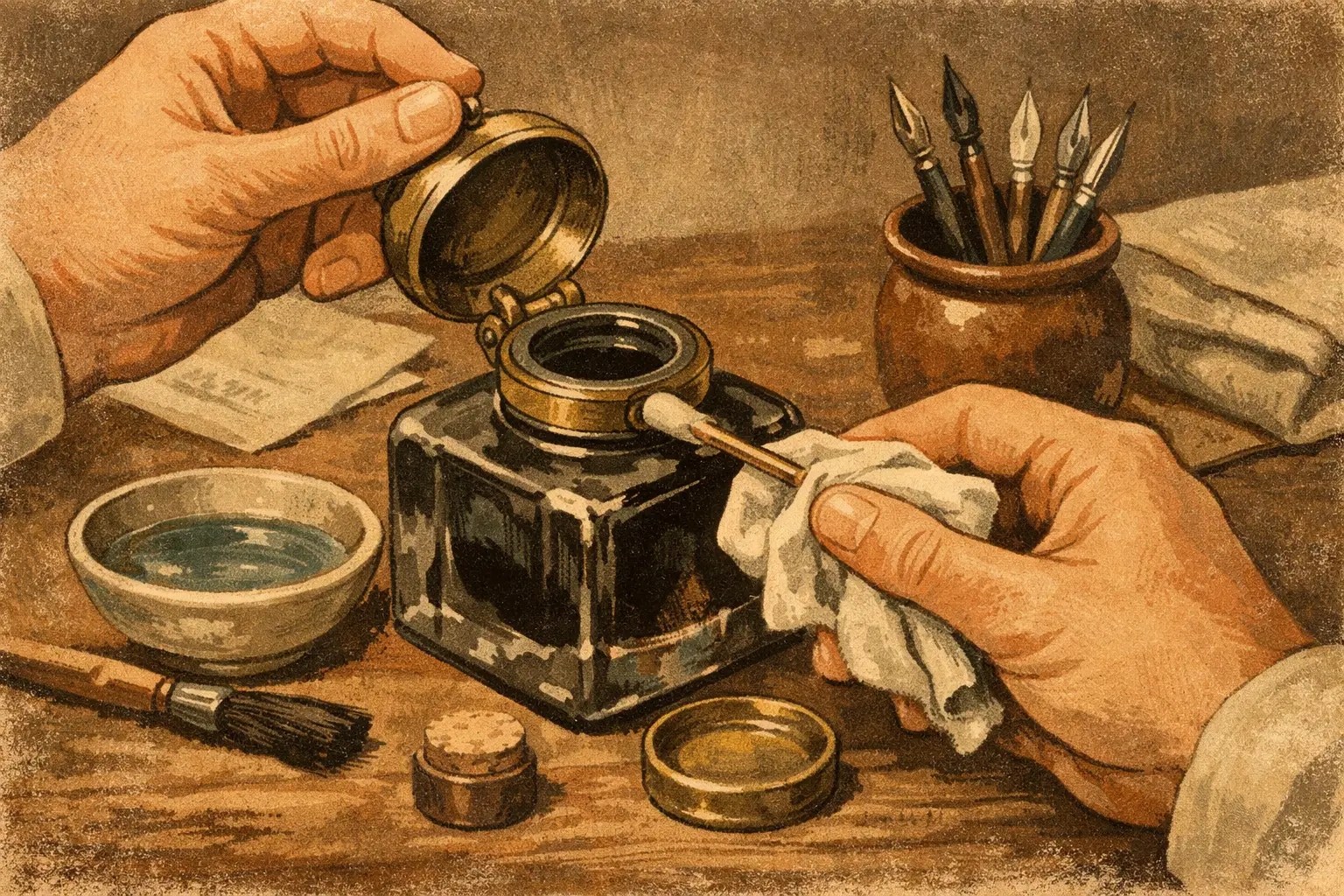
A neglected inkwell tells on itself quite quickly. Old ink cakes around the neck, sediment gathers at the base, and what should be a practical desk piece becomes something you hesitate to use. If you are wondering how to clean an inkwell without damaging the glass, metal mount or ceramic body, the good news is that the job is usually simple – provided you match the method to the material and the age of the piece.
For collectors and regular users alike, restraint matters more than force. Many inkwells survive for well over a century, but they do not respond kindly to harsh chemicals, metal tools or overconfident scrubbing. The aim is not to make a Victorian desk accessory look factory fresh. It is to remove residue, preserve the finish and keep the inkwell ready for display or use.
How to clean an inkwell without causing damage
Start by identifying exactly what you are cleaning. A plain glass inkwell with no fittings can tolerate more than a cut-glass example with a hinged brass lid, and both are very different from porcelain, pressed glass or silver-mounted pieces. If the inkwell has cracks, loose mounts or signs of old repairs, treat it as a delicate restoration project rather than routine cleaning.
Before doing anything else, empty out any loose debris and dried flakes. Turn the inkwell upside down over a lined surface so that any hardened ink falls onto something soft rather than into a sink. Never knock the rim against a hard edge. That is an easy way to turn a sound antique into a chipped one.
In most cases, lukewarm water is the correct first step. Fill the well partially, allow it to sit for a short while, then gently swirl to loosen old ink. If the residue is heavy, repeat rather than forcing the process. Dried fountain pen ink and dip pen ink often soften gradually, and patience usually achieves more than aggressive cleaning.
A cotton bud, soft cloth or a very soft bottle brush can help with the interior, but only if the opening allows safe access. If you have to force a brush through the neck, do not use it. Fine rims and threaded collars are vulnerable, especially on older examples.
The safest cleaning method for most inkwells
For a straightforward clean, use lukewarm water with a drop of mild washing-up liquid. That is enough for many glass and ceramic inkwells that have ordinary dried ink inside. Swirl the solution gently, leave it to loosen the residue, and rinse thoroughly until the water runs clear.
If staining remains, try soaking the inkwell for longer rather than increasing chemical strength. Several short soaks are often safer than one prolonged treatment, particularly where metal lids or internal fittings are attached. If the inkwell has a non-removable metal top, keep prolonged soaking to a minimum. Water trapped around hinges, collars and screws can encourage corrosion.
Stubborn residue around the mouth of the well can usually be lifted with a damp cotton bud. Work slowly and replace the bud as it darkens. Rubbing old ink back over the surface is pointless, and on gilt or plated mounts it can become abrasive.
Once clean, dry the inkwell fully before refilling or returning it to a cabinet. Air drying upside down on a soft towel works well for plain glass. Mounted pieces should be dried more carefully, using a cloth to remove moisture from seams and fittings.
Cleaning vintage inkwells by material
Material matters, and this is where many avoidable mistakes begin.
Glass inkwells
Glass is usually the easiest material to clean, but decoration changes the approach. Clear or plain coloured glass tolerates gentle washing well. Cut glass needs more care around sharp edges, where cloth fibres and cotton can catch. If the glass is iridescent, flashed, enamelled or gilded, avoid anything abrasive and do not assume the decoration is stable.
Cloudiness can be a separate issue from dirt. If the interior looks permanently hazy after cleaning, you may be seeing etching rather than residue. That will not wash away, and trying to polish it out from inside often does more harm than good.
Ceramic and porcelain inkwells
Ceramic inkwells often hold staining more stubbornly than glass, especially if the glaze is crazed. Water and mild soap are still the starting point, but avoid long soaking if the body has fine cracks. Moisture can work into old damage and weaken it further. Hand-painted decoration and gilt rims should be treated gently and never scrubbed.
Metal and mounted inkwells
Brass, silver plate and pewter mounts add character, but they complicate cleaning. If you can separate the glass liner from the stand or collar safely, do so. Clean each part individually. If you cannot, keep water exposure controlled and dry the metal promptly.
Do not use silver dip, metal polish or household cleaners inside an assembled inkwell unless you are completely certain of the materials involved. Residue can lodge in joints and be difficult to remove. Polishing the exterior metal is a separate task from cleaning the ink chamber, and the two should not be muddled together.
What to avoid when you clean an inkwell
When people ask how to clean an inkwell, they usually expect a cleaning product recommendation. More often, the best advice is what not to use.
Avoid boiling water. Sudden temperature change can stress old glass and open up hairline cracks in ceramic bodies. Avoid bleach, strong vinegar solutions and ammonia-based cleaners, especially on mounted or decorated pieces. These can affect finishes, loosen adhesives from old repairs and create problems that were not there to begin with.
Wire brushes, knives, dental picks and abrasive scourers have no place here. They may remove ink, but they can also scratch interiors, chip rims and strip surface detail. Even rice, salt or other internet favourites used as a shaking abrasive can mark softer interiors or catch in damaged areas. A valuable inkwell is not improved by improvisation.
It also depends on whether the inkwell is meant for use or display. A purely decorative piece with stable staining inside may be better left alone if cleaning risks disturbing fragile mounts or period patina. Collector judgement matters.
Dealing with very stubborn dried ink
Some inkwells have been left charged for decades, and the residue sets almost like varnish. In these cases, repeated soaking with lukewarm water is still the safest route. Let the water soften the deposit, empty it, and repeat over a few days if necessary.
For heavy build-up in plain glass only, a little extra washing-up liquid and gentle agitation can help. If the opening is wide enough, a soft baby bottle brush may shift softened material without scratching. Narrow-necked antique examples are trickier. If access is poor, forcing tools inside is usually riskier than accepting a faint stain.
If the piece is valuable, unusual or structurally compromised, professional restoration is the sensible choice. That is especially true for inkwells with silver lids, internal liners, sprung fittings, enamel plaques or evidence of previous repair. Cleaning is not difficult, but conservation judgement is a separate skill.
Keeping an inkwell clean after restoration or regular use
A clean inkwell stays clean more easily if you avoid letting ink dry inside it. If you use one on the desk, refresh the ink regularly and wipe the lip before replacing the lid. Old overflow around the neck is what creates the hard black collar collectors know too well.
Do not fill the reservoir more than you need. Smaller quantities are easier to monitor, and they reduce the chance of evaporation leaving concentrated sediment behind. If you rotate between pens, it is often better to keep the inkwell empty between sessions unless you use it frequently.
Storage also makes a difference. Keep the piece out of direct sunlight, away from radiators, and somewhere stable where it cannot be knocked. A restored writing desk accessory deserves the same basic care as a vintage fountain pen – clean hands, sensible handling and no heroic shortcuts.
At Heritage Collectables, we spend a great deal of time looking at the small details that separate careful stewardship from accidental damage. An inkwell may seem simpler than a pen, but the principle is the same: preserve first, clean second, and let the object keep its history without asking it to survive avoidable mistakes.
If your inkwell still looks used after a careful clean, that is not always a fault. Sometimes it is simply honest age, and there is a good deal of charm in that.