
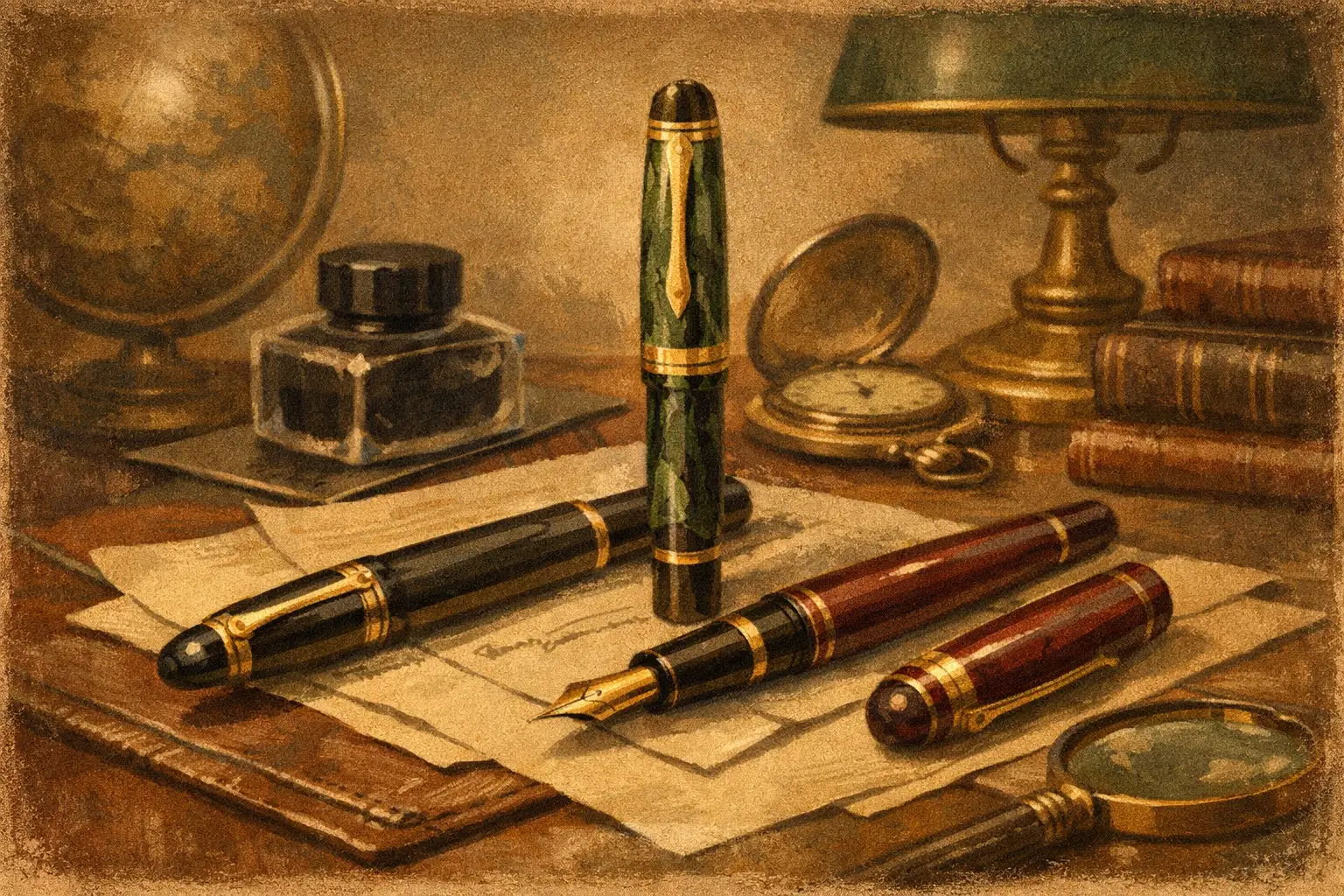
A luxury pen earns its place not when it sits untouched in a case, but when it feels right in the hand and puts a dependable line on paper. That is why vintage luxury pens remain so compelling. They combine materials and engineering that have already stood the test of decades with the distinct pleasure of owning an object that has a story beyond its purchase date.
For a collector, the appeal may lie in an uncommon cap band, a sought-after filling system or a particular year of production. For a daily writer, it may be the responsive feel of a gold nib or the reassuring balance of a well-made barrel. For a gift buyer, it is often the sense that a restored vintage pen is personal, lasting and far removed from the ordinary. The right choice depends on which of these pleasures matters most.
What Makes a Pen Truly Luxurious?
Price alone does not make a writing instrument luxurious. A pen can be expensive because it is rare, because it carries precious metal content, or because a fashionable name has elevated demand. Those factors matter, but they are only part of the picture. The most satisfying luxury pens bring together fine materials, purposeful design, reliable mechanics and a writing experience that encourages their owner to use them.
Vintage makers such as Parker, Waterman, Conway Stewart, Sheaffer, Montblanc and Pelikan built reputations through precisely this combination. Their best pens were not merely decorative. They were designed to travel in a jacket pocket, fill cleanly, survive regular use and make handwriting feel more deliberate. A striped celluloid barrel, a chased hard-rubber cap or a sterling silver overlay can be beautiful, yet the nib and filling mechanism are equally central to the pen’s character.
Age adds another dimension. A 1930s Waterman or a mid-century Parker has passed through changing fashions and technologies while retaining its appeal. That does not make every old pen collectible, nor does rarity guarantee a better writing instrument. It does mean that vintage examples often offer a level of individuality difficult to find in mass-produced modern goods.
Choosing Luxury Pens for Writing or Collecting
The first useful question is simple: will the pen be written with, displayed, given as a gift, or all three? A daily writer should prioritise comfort, a sound cap and clip, dependable ink flow and a nib suited to the owner’s handwriting. A collector may place greater emphasis on originality, finish, scarcity and historical importance. A gift buyer needs both confidence in condition and a style that feels appropriate to the recipient.
There is no single best brand or period. A broad, comfortable Pelikan piston-filler may suit someone who enjoys generous ink capacity and a substantial hand feel. A Parker 51 can be an excellent choice for regular writing, valued for its hooded nib and practical design. Conway Stewart offers distinctly British colour and pattern, while a Waterman lever-filler may appeal to those who enjoy the more traditional ritual of filling a pen from an ink bottle.
Size deserves more attention than it often receives. Some vintage pens are delightfully compact but may feel slight during extended writing. Others are full-length and beautifully balanced, though they can be too large for smaller hands. If a cap is designed to post on the barrel, that may transform the pen’s balance. The ideal instrument is not necessarily the largest, heaviest or most ornate one. It is the one a person will reach for without hesitation.
The Nib Is the Heart of the Experience
A gold nib does not automatically write better than steel, but it is often where a fine vintage pen reveals its personality. Nibs vary in width, firmness and response. A fine nib suits smaller handwriting and notebooks with close ruling. Medium nibs are versatile for letters and general correspondence. Broad and stub nibs can give handwriting greater presence, with natural line variation that is particularly pleasing on good paper.
Flex requires a little caution. A genuinely flexible nib can create expressive variation between fine upstrokes and broader downstrokes, but it is not a shortcut to effortless calligraphy. It needs a light hand, suitable ink and an appreciation of its limits. Pressing hard can damage a vintage nib. Many buyers are better served by a smooth, mildly responsive nib that makes everyday writing enjoyable.
When considering a pen at a distance, look for clear information on nib material, marked width where present, writing characteristics and any known repair. A specialist seller should be able to distinguish a pen that has simply been polished from one that has been properly assessed, serviced and tested.
Why Restoration Matters
A vintage pen may look impressive in a photograph while being unsuitable for ink. Old sacs perish, seals harden, piston mechanisms seize and feed channels collect dried residue. These are normal consequences of age, not necessarily faults that should put a buyer off. They do, however, make expert restoration essential if the pen is intended for use.
Proper restoration respects both function and originality. It may involve replacing a deteriorated ink sac, fitting a new seal, cleaning the feed, aligning nib tines, renewing a cork or servicing a lever or button-filling mechanism. The aim is not to erase the evidence of a pen’s history. Honest wear, light marks and the gentle mellowing of materials can be part of its charm. The aim is to return the mechanism to reliable working order without compromising the instrument’s character.
Over-restoration can reduce collector interest. Heavy polishing may soften crisp chasing or remove desirable surface detail. Replacing original parts unnecessarily can affect authenticity. Conversely, leaving a pen unserviced simply because it is old creates uncertainty for the buyer. The best balance is careful, clearly described work that allows the pen to be enjoyed while preserving what makes it original.
At Heritage Collectables, restored writing instruments are selected with this practical standard in mind: a vintage pen should be appreciated as a historical object, but it should also be capable of doing the job for which it was made.
Materials, Condition and the Value Question
Celluloid, hard rubber, resin, lacquer, sterling silver and gold-filled overlays each age differently. Celluloid can display remarkable colour and depth, especially in marbled, pearlescent or striped patterns, but it should be examined for shrinkage, discolouration or distortion. Hard rubber has an unmistakable warmth and historical appeal, though it can fade to brownish tones if exposed to sunlight. Metal pens and overlays should be assessed for dents, plating wear and worn engraving.
Condition is not a simple pass-or-fail judgement. A scarce pen with light brassing may be more desirable than a common example in near-perfect condition. A pen intended as a daily companion may be a better purchase with modest cosmetic wear and a freshly serviced filling system than an immaculate but untested collector piece. Clear photographs and straightforward descriptions are valuable because they let a buyer decide which compromises are acceptable.
Original boxes, paperwork, matching pencils and period accessories can add interest and value, particularly for collectors. They should not overshadow the pen itself. A beautifully restored fountain pen without its original box can still be a far more rewarding acquisition than a boxed example with a damaged nib or failed mechanism.
Caring for a Vintage Pen After Purchase
A restored pen will reward sensible care. Use fountain pen ink intended for fountain pens rather than India ink, calligraphy ink or heavily pigmented drawing ink. These can clog feeds and are difficult to remove. If a pen is not going to be used for several weeks, empty and rinse it with cool water, then allow it to dry before storage.
Keep vintage pens away from prolonged heat, direct sunlight and damp conditions. Avoid forcing a cap, lever, piston or section if it resists. A mechanism that feels stiff may only need professional attention, whereas forcing it can turn a minor service issue into a costly repair. For regular writers, a soft pen sleeve or a secure case protects against scratches and knocks in a bag or briefcase.
It is also worth matching the pen to the paper. A smooth, fountain-pen-friendly notebook makes the most of a fine nib, while absorbent office paper may make a wet broad nib feather or spread. The difference can be striking, and it is one reason a pen that seems disappointing on one page can feel exceptional on another.
A fine vintage pen is not an item to keep for a distant special occasion. Fill it, write a letter, sign a card or make the day’s notes feel considered. With thoughtful selection and proper care, it can become not just a luxury possession, but a familiar and enduring part of a life well written.