
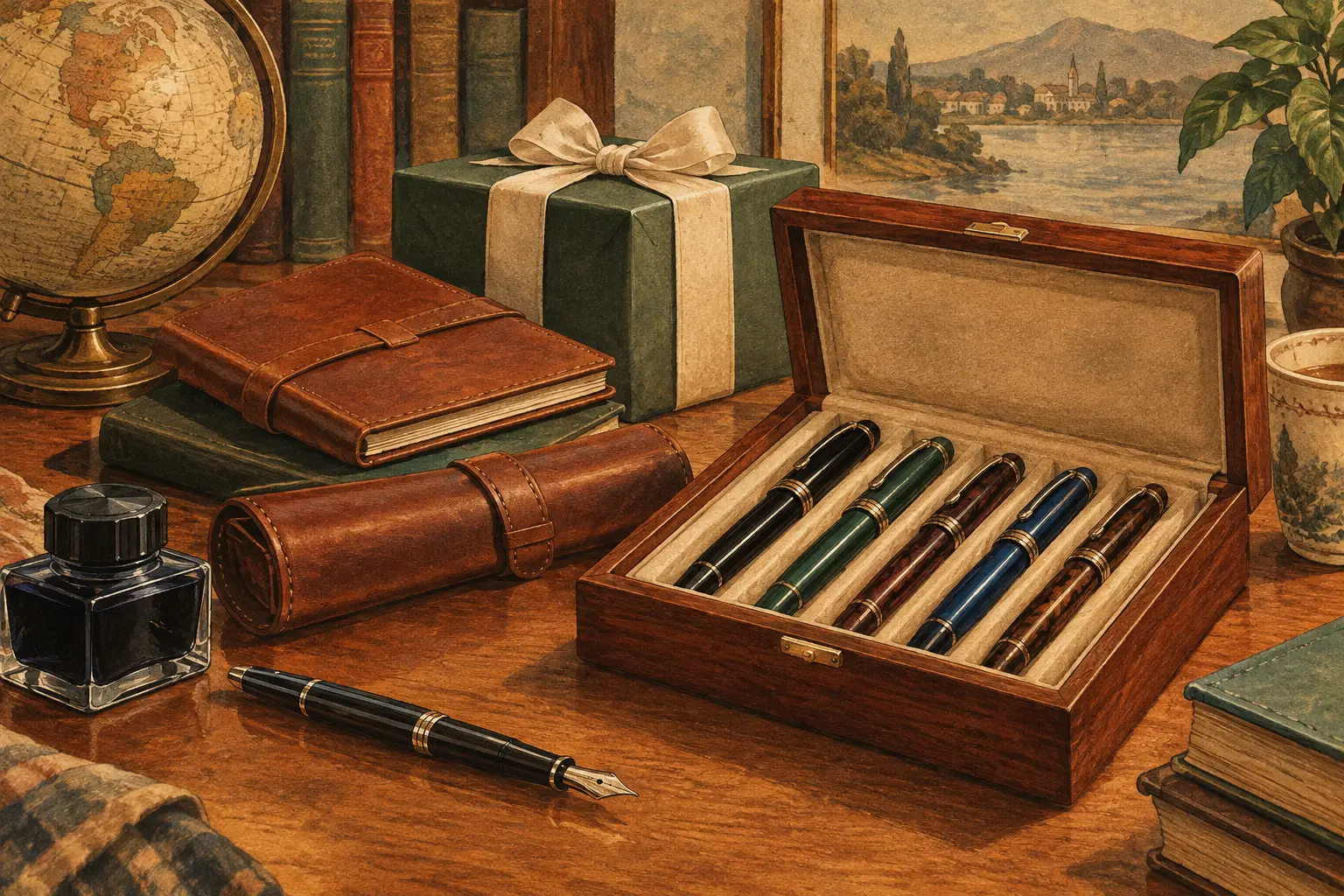
A pen collector rarely needs just another pen. What they value is the right pen: a model with a story, a desirable detail, a useful restoration, or a place within the collection they are building. The best gift ideas for pen collectors recognise that distinction. They combine the pleasure of owning a handsome object with the confidence that it can be admired, researched and, where appropriate, put back into regular use.
Begin with the collector, not the price
Before choosing a gift, consider what the recipient actually collects. A devoted Parker enthusiast may be delighted by a carefully restored 51, Duofold or Vacumatic, but less interested in an equally fine Waterman. Someone who writes every day may prefer a dependable vintage fountain pen with a smooth medium nib, while a display-focused collector may value rarity, original finish and complete period presentation above daily practicality.
Look, too, at the period they favour. The clean lines of a 1950s Sheaffer are very different from the chased hard rubber and ornate overlays of Victorian writing instruments. If their desk is filled with Art Deco pieces, a brightly coloured 1920s pencil or compact inkwell may make more sense than a large post-war pen.
There is no need to become an expert overnight. A few observations can prevent an expensive near miss. Notice the brands they mention, the pens they reach for, whether they use bottled ink, and whether their collection is arranged by maker, decade, filling system or colour.
A user, a curator, or both?
Many collectors are both users and curators, but one instinct usually leads. A user will appreciate a pen that has been properly serviced, tested and made ready for sensible writing. A curator may be more concerned with original parts, correct markings, scarce finishes and the integrity of the piece as an historical object.
Neither approach is more valid. It simply changes the gift. The safest choice for a user is a restored instrument from a knowledgeable specialist. For a curator, provenance, condition notes and accurate identification often matter as much as the object itself.
Gift ideas for pen collectors with real character
A restored vintage fountain pen
A restored fountain pen is the classic present for good reason. It offers design history, mechanical interest and a writing experience that modern pens rarely reproduce. The best examples feel personal from the first uncapping: the balance in the hand, the sound of the cap thread, the flex or firmness of the nib, and the distinctive filling mechanism all contribute to the appeal.
Choose a recognised maker when you know the recipient has a preference. Parker, Waterman, Conway Stewart, Sheaffer, Pelikan and Montblanc each offer their own collecting paths. If you are uncertain, a well-restored pen in an attractive but versatile finish is usually wiser than chasing a supposedly rare model without understanding its condition.
Restoration is central here. A vintage pen may look excellent yet need a new sac, diaphragm, seal or careful nib adjustment before it can be trusted. Buy from a seller who describes the work carried out and presents the pen honestly. A collector will appreciate both the pen and the reassurance behind it.
A matching vintage pencil
Vintage pencils are often overlooked by gift buyers, which makes them especially rewarding. They are compact, practical and frequently more affordable than their fountain-pen counterparts. A matching Parker, Conway Stewart or Sheaffer pencil can complete an existing set, while a stand-alone mechanical pencil makes an elegant daily companion for notes, sketches and crosswords.
Check whether the collector enjoys propelling pencils, twist-action models or older clutch mechanisms. Lead size matters for regular use, so it is worth confirming that suitable lead is readily available. For a display collector, the finish and maker’s imprint may take priority.
A pen case, presentation box or travelling companion
A good pen case solves a real collector’s problem: how to protect treasured instruments away from the desk. A single-pen case makes a refined gift for someone who carries one favourite pen. A larger case or storage box is more useful for the enthusiast whose collection has outgrown a drawer.
The best choice depends on how the recipient stores their pens. Soft-lined compartments help prevent clips and barrels rubbing together, while a rigid presentation box can turn a special acquisition into a proper occasion. Avoid cases that grip pens too tightly, particularly around delicate clips or lever mechanisms.
A desk stand, pen rack or inkwell
For the collector who enjoys using their pieces at a desk, an accessory can be more memorable than another instrument. A vintage pen stand gives a favourite pen a permanent home and brings character to a study or writing table. A pen rack is particularly useful for rotating a small group of inked pens without leaving them loose on the surface.
Inkwells have an appeal beyond their original purpose. Victorian glass, ceramic and metal examples can be decorative objects in their own right, and they pair beautifully with dip pens, nibs and handwritten correspondence. Do check that an antique inkwell is stable and free from cracks if it is likely to be used with ink rather than simply displayed.
A considered selection of ink
Ink is a highly practical present, but it becomes far more thoughtful when chosen for the collector’s pens. Traditional blue-black, blue and black remain sensible choices for vintage fountain pens, particularly for regular writing. More saturated or heavily sheening inks can be enjoyable, though they may require more frequent cleaning and are not the first choice for every older filling system.
A small group of well-chosen colours is better than an indiscriminate assortment. Think about the recipient’s habits: formal letters, journalling, sketching, annotation or simply the pleasure of trying a new shade. Bottled ink is ideal for the enthusiast who enjoys the ritual of filling a pen; cartridges suit those who favour convenience and compatible modern instruments.
Victorian dip pens and replacement nibs
For a collector interested in nineteenth-century writing, a dip pen and a selection of appropriate nibs provide a direct connection with the period. The experience is slower than using a fountain pen, but that is part of its charm. Changing nibs reveals how much line variation, flexibility and character can come from a small piece of steel.
This is also a fine gift for calligraphers, letter writers and artists. Pair the nibs with an inkwell or a small bottle of suitable ink, and the gift becomes an invitation to spend an afternoon writing rather than merely adding an item to a shelf.
A book on pen history or a specialist catalogue
Collectors tend to enjoy the research as much as the hunt. A good reference book can help identify model variations, dates, fillings and materials, while period catalogues reveal how a pen was originally marketed and priced. This is an excellent choice when you know the recipient has a narrow collecting interest but you do not feel confident choosing a specific model.
Reference material is not only for advanced collectors. It makes future purchases more rewarding, and it gives a new enthusiast the vocabulary to describe what they are looking for.
Restoration tuition or a repair contribution
For the practical collector, the gift of knowledge can outlast almost any object. Restoration tuition introduces the tools, materials and judgement involved in bringing older writing instruments back to life. It is especially suitable for someone who already enjoys careful mechanical work and understands that preservation is not the same as polishing everything until it looks new.
A contribution towards a professional repair can be equally welcome. Perhaps the recipient has a cherished family pen waiting in a drawer, or a favourite instrument with a fault that deserves proper attention. In these cases, the gift carries emotional value as well as practical benefit.
Buying vintage gifts with confidence
Condition deserves more than a quick glance at photographs. Ask whether the pen has been restored, whether its filling system operates correctly, whether the nib is original, and whether there are cracks, dents, brassing or personal engravings. Such features are not always faults. An engraved cap may add history, and light age-related wear can be entirely appropriate, but the buyer should know what they are receiving.
Be wary of treating rarity as a guarantee of desirability. A scarce pen in compromised condition may be less satisfying than a commoner model in excellent, serviced order. Equally, an original un-restored pen can be the right purchase for an advanced collector, but it may be unsuitable as a ready-to-write gift.
At Heritage Collectables, the emphasis on restored vintage writing instruments helps gift buyers choose pieces with both collector appeal and practical potential. A clear description, careful photographs and a fair returns policy remain valuable safeguards wherever you buy.
The details that make the gift feel personal
Presentation matters, especially with a vintage object. Include a short note explaining why you selected it: perhaps it is from the recipient’s favourite maker, it matches their love of green marbled finishes, or it represents a decade they enjoy collecting. That small piece of thoughtfulness can turn a fine pen into a treasured gift.
If you are purchasing an instrument for use, consider adding ink or suitable lead so it can be enjoyed straight away. If it is for display, a case, stand or modest reference book may create a more complete present without distracting from the main piece.
The most successful gift is not necessarily the rarest item in the cabinet. It is the one that makes the recipient want to write a letter, research a maker, restore an old favourite, or clear a little more space on the desk for the next chapter of their collection.