
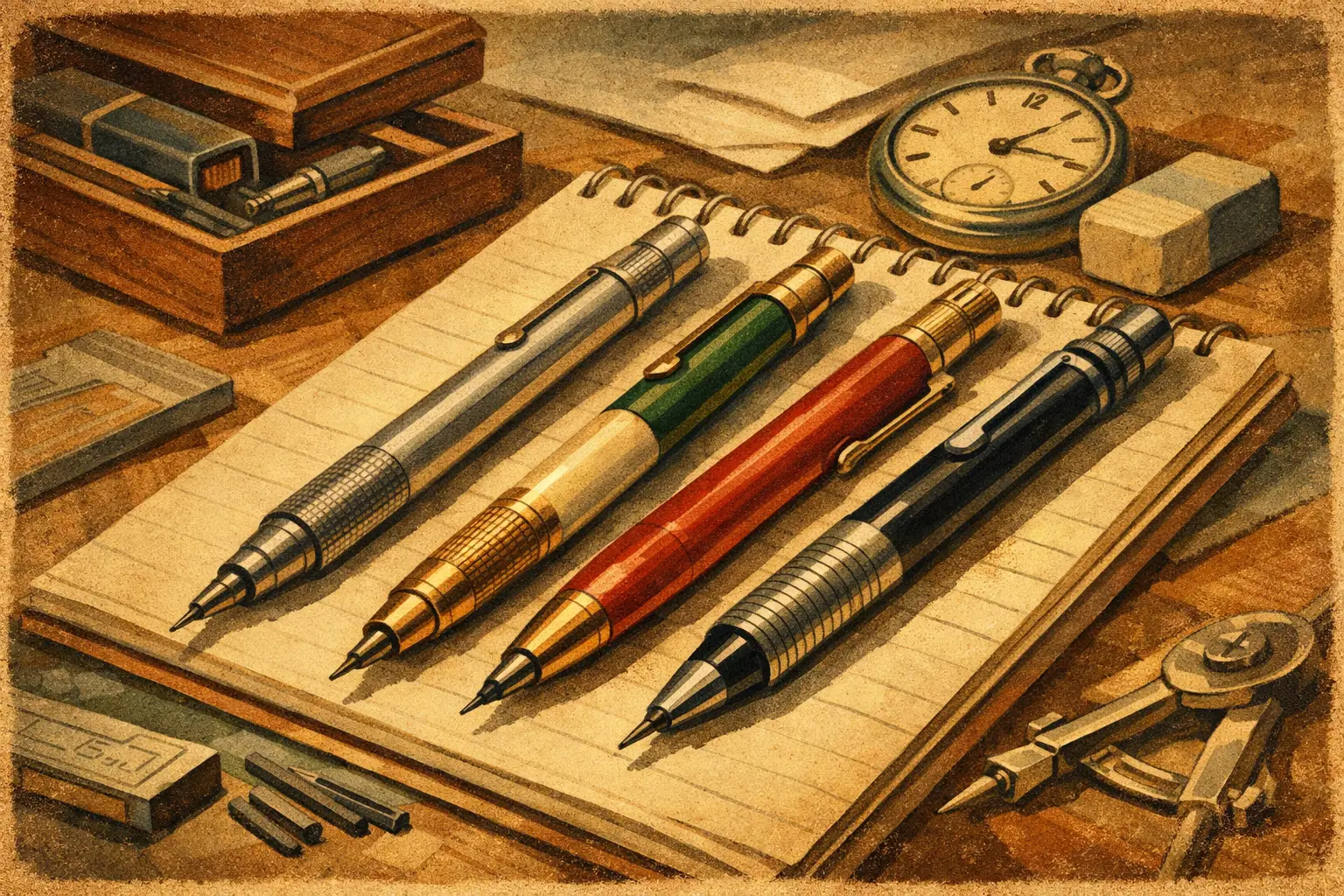
A good vintage pencil tells on itself within seconds. The twist should feel positive, the propel action should not graze or stick, and the barrel should sit in the hand with that unmistakable balance modern pencils rarely match. When people search for vintage mechanical pencils for sale, they are usually looking for more than an old writing tool. They want sound mechanics, proper restoration and the reassurance that what arrives will be as pleasing to use as it is to own.
That is where the difference lies between a random antique find and a properly curated vintage piece. Mechanical pencils from Parker, Sheaffer, Conway Stewart, Waterman and other established makers were designed for daily service, not just display. Many still perform beautifully today, but only if the lead mechanism, nose cone, clutch, threads and finish have been checked with care.
Why vintage mechanical pencils still attract serious buyers
There is a practical reason these pencils remain in demand. A well-made vintage mechanical pencil offers precision, compactness and a writing experience that feels deliberate. Whether you use one for notes, marginalia, sketching or keeping alongside a fountain pen as part of a matched set, the appeal is immediate.
There is also the collector’s angle. Vintage pencils often sit within wider families of writing instruments, which means a single purchase can complete a set or strengthen a themed collection. A Parker pencil from the same line as a cherished fountain pen, or a Sheaffer pencil in a matching finish, has significance beyond utility. For many buyers, that combination of usability and historical continuity is exactly the point.
Not every buyer wants the same thing, though. Some want a daily writer with honest wear and dependable mechanics. Others are looking for a scarcer finish, a particular decade or a model that has become harder to source in fully working order. The right purchase depends on whether you are buying to use, collect, gift or restore further.
What to look for when browsing vintage mechanical pencils for sale
Condition should always be read in two ways: cosmetic and mechanical. A pencil can polish up nicely yet still hide a weak mechanism or damaged internal parts. Equally, one with light surface wear may be the better buy if the action is crisp and the structure is sound.
The first area to assess is how the pencil advances lead. Different makers used different systems, and age affects each in its own way. Twist mechanisms can stiffen. Propelling systems can become hesitant. Clutches may hold poorly if worn or dirty. None of this automatically rules out a piece, but it does mean restoration quality matters. A specialist seller should understand how the pencil was designed to operate and whether it has been brought back to proper working order.
Finish matters too, especially with rolled gold, gold-filled, sterling silver, engine-turned and lacquered examples. Minor signs of age are often acceptable, and many collectors prefer them to over-polishing, but heavy brassing, dents, splits or plating loss can materially affect value. The same goes for clips, imprint clarity and maker’s marks. These details help establish authenticity and can be decisive if you are buying for a collection rather than simple use.
Lead size is another detail worth checking. Some vintage pencils were made for lead sizes that are less common now. That does not make them undesirable, but it does affect practicality. If you intend to write with the pencil regularly, it is worth confirming what lead it takes and how easily that lead can be sourced.
Restoration is not a minor detail
In this category, restoration is not cosmetic housekeeping. It is the difference between owning a charming object and owning a functioning writing instrument. A vintage pencil may need cleaning, thread correction, internal adjustment or more careful work to return it to dependable operation. That work should respect the original construction rather than force a modern fix onto an older mechanism.
Buyers are right to be cautious here. Poor restoration can create fresh problems: threads stripped by over-tightening, polished surfaces dulled by aggressive compounds, replacement parts that compromise originality, or mechanisms made superficially mobile without being genuinely reliable. A restored pencil should still feel like the period piece it is, just operating as it ought to.
For that reason, provenance of restoration counts. Specialists who work regularly with vintage writing instruments tend to recognise recurring faults by brand and era. They know where a Parker mechanism usually wears, how a Conway Stewart fitting should seat, and which signs suggest an older repair has been carried out badly. That depth of knowledge gives buyers confidence, particularly if they are purchasing at a distance.
Brand, era and design all affect value
Some buyers begin with style, others with maker. Both approaches are sensible. Certain brands carry established collector demand, but desirability also depends on model, finish and scarcity. A less famous maker can be every bit as compelling if the design is strong and the condition excellent.
Parker pencils remain consistently sought after because they combine recognisable design with dependable engineering. Sheaffer has similar appeal, especially where a pencil complements a fountain pen set. Conway Stewart attracts buyers who value British manufacture and period styling, while Waterman can appeal to those who want a slightly different design language without losing heritage credibility.
Era makes a difference as well. Early twentieth-century examples often attract collectors for their materials and mechanisms, while mid-century pencils can be especially appealing to users who want clean lines and practical handling. Later vintage pieces may offer a lower entry point without sacrificing charm. There is no single best period. It depends on whether you value rarity, aesthetics, compatibility with other instruments or straightforward daily use.
Buying for use, collecting or gifting
A sensible purchase starts with a clear intention. If you want a pencil for everyday writing, prioritise reliable operation, comfortable dimensions and accessible lead size. In that case, a lightly worn but properly restored example may be a better choice than a scarcer piece whose value lies mainly in collectability.
If you are buying for a collection, originality and model significance move to the front. Matching boxes, inscriptions, rare finishes and crisp imprints may matter more than whether the pencil will spend hours in active service. Small condition differences can affect desirability sharply at this end of the market.
Gift buyers tend to sit between the two. They usually want a piece with presence, quality and a story, but also one that can be enjoyed immediately. A restored vintage mechanical pencil makes an especially good gift for someone who already appreciates fountain pens, stationery or traditional craftsmanship. It feels thoughtful without being generic.
Why specialist stock is worth seeking out
The market for vintage writing instruments has breadth, but not all of it is reassuring. General antiques listings often lack detailed mechanical checks. Estate pieces may be attractive but untested. Photographs can flatter, and vague phrases such as “appears to work” or “untouched condition” are not substitutes for proper assessment.
Specialist stock tends to be stronger because it is curated with the buyer’s actual use in mind. Descriptions are usually more precise. Faults, if present, are more likely to be identified clearly. Restoration standards are easier to judge, and you are more likely to find related pieces by brand or category if you are building a set or refining a collection.
That category depth also matters when preferences are specific. Buyers often arrive wanting a Parker propelling pencil, a rolled-gold example from a certain decade, or a match for an existing pen. A specialist retailer can organise stock in a way that makes those searches practical rather than speculative. At Heritage Collectables, that combination of restored stock, brand breadth and buyer reassurance is central to the appeal.
A measured way to buy well
The best purchases are rarely the fastest ones. Read the description carefully, look for signs of informed restoration and ask yourself what matters most: appearance, rarity, matching potential or straightforward usability. A fine vintage pencil does not need to be perfect to be worth owning, but it should be honestly presented and mechanically sound for the standard claimed.
If you see several vintage mechanical pencils for sale that broadly suit your taste, the smarter question is not simply which looks best in a photograph. It is which one has been understood properly by the seller. That understanding is what turns an interesting old pencil into a dependable acquisition.
A well-bought vintage pencil earns its place quickly. It might complete a set, become the pencil you reach for every morning, or simply remind you that good design was once built to last. That is reason enough to choose carefully.
2 thoughts on “Vintage Mechanical Pencils for Sale”