
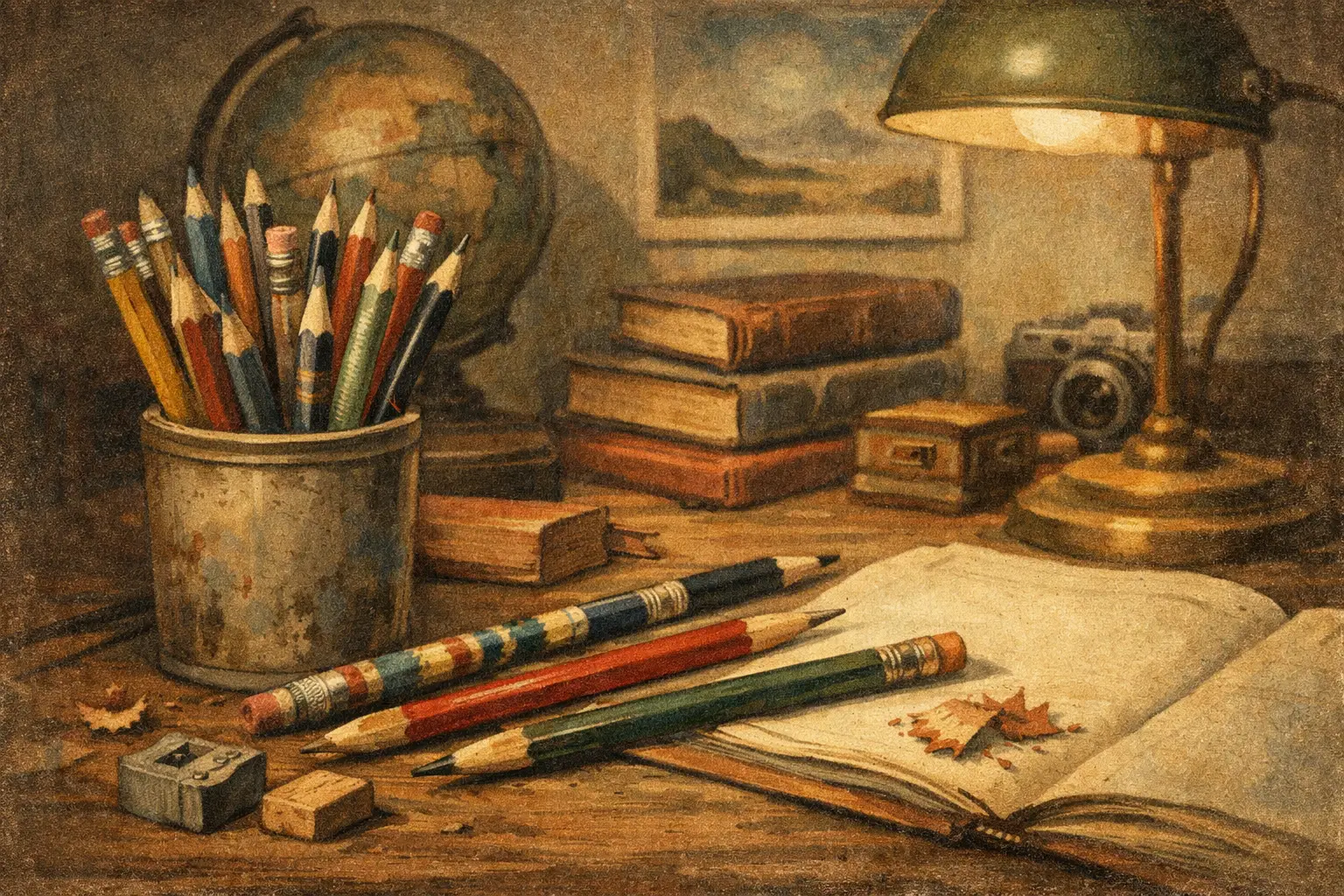
A pencil shaped like a golf club, a miniature propelling pencil hidden inside a brooch, a finely made advertising piece from a long-vanished British retailer – novelty vintage pencils sit in a part of the market where humour, design and collectability meet. They are often bought for their charm, but the best examples offer far more than a visual gimmick. They can reveal period tastes, manufacturing skill and the inventive spirit of makers who wanted everyday writing instruments to feel personal.
For collectors and users alike, novelty vintage pencils deserve a closer look than they usually get. Some are genuinely scarce. Some are beautifully engineered. Others are little more than curiosities with limited practical use. Knowing the difference matters, especially if you want pieces that are both interesting and properly restorable.
What counts as novelty vintage pencils?
In broad terms, novelty vintage pencils are pencils made to amuse, advertise, disguise another function or take an unusual form. That might mean figural pencils shaped as tools, sporting items or animals. It can also include compact pencils made as charms, watch fobs, dance card pencils, ladies’ accessories or souvenir pieces. Advertising pencils often sit in the same category when their appeal goes beyond branding and into period design.
The category is wider than many buyers expect. A silver telescopic pencil from the late Victorian period may look refined rather than playful, yet it was still designed as a novelty object in the sense that it combined portability, ornament and social use. Likewise, an early mechanical pencil in the form of a bullet, a bottle or a propelling match holder was intended to spark interest before it ever touched paper.
That variety is part of the appeal, but it also means buyers need to judge each piece on its own merits. There is no single rule for value across the whole category.
Why collectors are drawn to novelty vintage pencils
The obvious answer is character. A good novelty pencil has immediate presence in a cabinet or writing collection, and many make excellent conversation pieces. Yet serious collectors are usually after something more specific than charm alone.
First, these pencils often sit at the crossroads of collecting fields. A military-themed pencil may interest not just writing instrument buyers but militaria collectors. A jewelled dance pencil might appeal to those who collect antique accessories. An advertising propelling pencil may attract interest from ephemera specialists and brand historians. That overlap can make the category surprisingly competitive.
Second, novelty pieces often survive in lower numbers than standard production pencils. People misplaced them, wore them out, or kept only the decorative casing while the internal mechanism failed. When a fully intact example appears, especially in working order, it can command stronger interest than a buyer new to the field might expect.
Third, they tell a useful story about how pencils were marketed and used. Standard models show brand development and mechanical progress. Novelty examples show how makers adapted those same skills for social fashion, gift giving, travel and promotion.
The difference between charming and truly collectible
Not every unusual old pencil is a strong collectible. Some are appealing but fairly ordinary. Others are rare yet too compromised to justify serious money. The key is to weigh design, condition, maker and functionality together.
A named maker usually helps. Well-regarded manufacturers, or pieces bearing clear hallmarks, patent details or retailer marks, tend to hold stronger interest because they can be identified and placed in context. Anonymous novelties can still be worthwhile, but they depend more heavily on quality of construction or unusual subject matter.
Condition is especially important with novelty vintage pencils because damage is often hard to put right. A plain chased silver pencil can sometimes be restored sympathetically even if worn. A figural novelty with missing applied parts, enamel loss or a bent mechanism may be much more problematic. Once the distinctive feature is compromised, much of the appeal goes with it.
Functionality matters too, although it depends on the buyer. Some collectors are content with a display piece. Others want a pencil that still advances lead cleanly and writes as intended. In our view, a working novelty pencil nearly always has the stronger case. Vintage writing instruments were made to be used, and practical usability adds another layer of satisfaction.
Common types worth knowing
Advertising and souvenir pencils
These are often the most accessible entry point. They can range from straightforward branded propelling pencils to highly decorative pieces tied to exhibitions, holiday destinations, shops or events. Their value depends on scarcity, visual appeal and the desirability of the name attached.
An obscure local advertisement may be modestly priced unless the object itself is striking. A sought-after historic brand or an appealing piece of period graphic design can lift interest considerably.
Figural and themed pencils
These are what many people picture first – pencils shaped like animals, sporting equipment, tools or vehicles. Some are playful mass-market items. Others are surprisingly detailed and finely engineered. The best combine a convincing form with a mechanism that still works neatly.
Telescopic and accessory pencils
Victorian and Edwardian examples often fall here. These include chatelaine pencils, dance pencils, pencils for notebooks or calling card cases, and small propelling pencils meant to be carried on a chain. They may not look whimsical by modern standards, but they were novelty items in their own day because they combined ornament and utility in inventive ways.
Combination pieces
Some vintage pencils were paired with another object – a seal, a penknife, a ruler, a perfume vial or another pocket tool. These pieces can be especially desirable because they show the ingenuity of the period. They also present more scope for damage or incomplete parts, so close inspection is essential.
What to check before you buy novelty vintage pencils
The first question is simple: is it complete? On novelty pieces, missing tassels, loops, sliders, clips, caps or decorative fittings are common. Even if the pencil still writes, incompleteness affects collectability and value.
The second is whether the mechanism works as it should. Propelling systems vary widely, and some are delicate. A seller should be able to say whether the lead advances, retracts or locks correctly, depending on design. If that information is vague, caution is sensible.
The third is material. Silver, gold-filled, rolled gold, enamel, celluloid and early plastics all age differently. Hallmarks and maker’s marks add reassurance, but so does honest description of wear. A polished piece may look bright in photographs while hiding loss of detail or over-cleaning.
Finally, consider scale. Many novelty pencils are smaller than expected. That is not a fault, but it affects usability. A charming miniature may be perfect for a cabinet and less convincing if you hope to write with it regularly.
Restoration and the limits of repair
This is where specialist knowledge really matters. Novelty pencils can look simple until they are taken apart. Internal threads may be worn, lead chambers blocked, sliders misaligned or decorative sections fragile from age. An inexperienced repair can strip threads, split casings or erase original finish.
Sensitive restoration should aim to preserve what makes the piece distinctive while returning it to safe, functional condition where possible. That may mean stabilising rather than over-restoring. It may also mean accepting that not every novelty pencil should be forced back into full daily use.
There is always a balance to strike. A collector-grade example may be best left with light signs of age if the surface and mechanism remain honest. A more modest piece might justify fuller repair if the goal is enjoyable use. The right choice depends on rarity, materials and intended purpose.
Buying for display, use or gift
If you are buying for display, prioritise form, completeness and period interest. If you want regular use, focus more firmly on mechanism, grip and practicality. Some novelty pencils are pleasant writers. Others are too slight, too awkward or too delicate for much beyond occasional notes.
As gifts, they can be exceptional because they feel individual. A vintage pencil linked to a profession, hobby or era often has far more personality than a modern novelty item. The crucial point is to buy from a specialist who understands condition and can describe usability clearly, not simply list an object as old and unusual.
For those building a broader writing instrument collection, novelty pencils also offer welcome contrast. Alongside classic Parker, Conway Stewart or Waterman pieces, they bring in a different side of pencil history – one rooted in fashion, invention and social life as much as engineering.
Are novelty vintage pencils worth buying?
Yes, when they offer more than novelty alone. The strongest examples combine originality, sound condition, identifiable period character and, ideally, working function. The weaker ones rely on oddity without quality, or survive in too compromised a state to justify the premium that the word novelty sometimes attracts.
That is why careful sourcing matters. A specialist dealer can usually tell you whether a piece is merely amusing, genuinely scarce, sensibly restored or realistically priced. For buyers who value authenticity and practical confidence, that reassurance is not a luxury. It is part of the purchase.
The pleasure of collecting old writing instruments often lies in finding objects that still have life in them. With novelty vintage pencils, the best pieces do exactly that. They raise a smile, certainly, but they also carry the workmanship and character that make vintage writing worth collecting in the first place.