
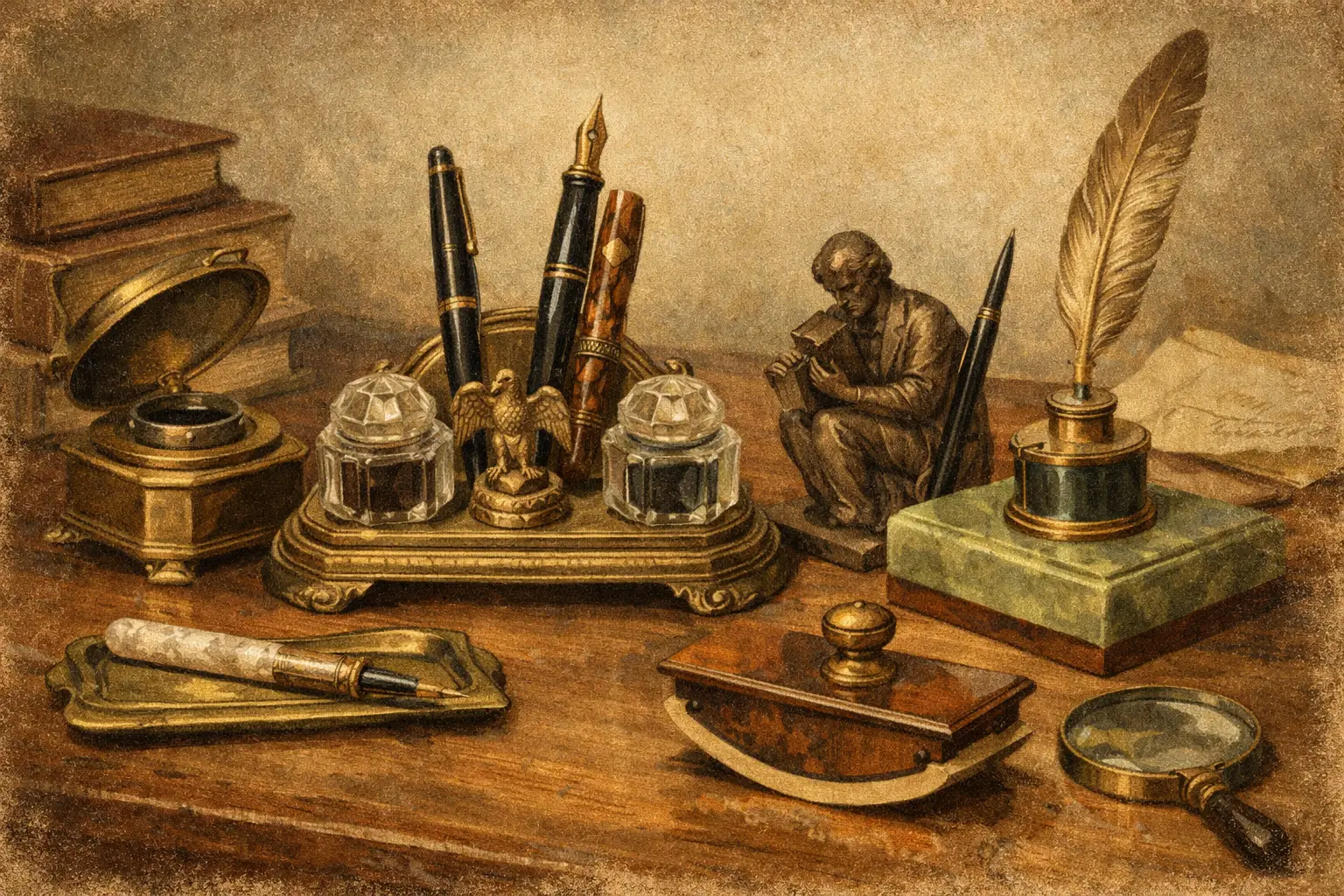
A good pen deserves better than being dropped in a drawer. That is why antique pen stands still earn their place on a desk, not simply as decorative survivors, but as practical pieces that bring order, weight and period character to the writing experience. For collectors of fountain pens, dip pens and pencils, the right stand can complete a display and make daily use feel that bit more intentional.
Why antique pen stands still matter
There is a difference between a desk accessory and a desk piece. Modern holders often do the basic job, but antique pen stands were made in an age when the writing table was part of the room’s furniture and not an afterthought. Materials were chosen to last, bases were weighted properly, and the design usually balanced utility with presence.
That matters to collectors because a pen stand is rarely isolated from the rest of the collection. A Victorian brass stand beside a chased silver propelling pencil, or an early 20th-century onyx base supporting a black chased hard rubber pen, creates a more coherent setting than a generic modern tray ever could. For many buyers, that sense of historical fit is half the appeal.
There is also the practical side. Antique pen stands help prevent rolling, reduce desk clutter and give fragile or restored writing instruments a designated resting place. If you regularly rotate pens, they can be far more useful than a case that spends most of its time closed.
What counts as an antique pen stand?
The term is used rather loosely, so it helps to be clear. In the strict trade sense, an antique is usually over 100 years old. In the broader collecting market, however, buyers often use antique pen stands to include late Victorian, Edwardian and early to mid-20th-century desk stands as well.
That wider use is understandable because the style continuity is strong. A 1910 dip pen stand, a 1920s desk set base and a 1930s fountain pen rest may all appeal to the same collector. The line between antique and vintage matters for cataloguing and valuation, but for a buyer choosing a desk piece, condition, design and suitability are often more important.
The main types of antique pen stands
Some stands were designed for dip pens and nibs, others for fountain pens, and some sat within larger desk sets that included inkwells, letter racks or blotters. Knowing the original purpose helps you avoid buying something handsome but awkward to use.
Dip pen stands and inkwell bases
Victorian examples often combine a pen rest with one or two inkwells. These can be made from brass, cast iron, ceramic, wood, marble or pressed glass. They suit collectors of nib holders and dip pens particularly well, although some can also accommodate slimmer fountain pens.
The advantage here is atmosphere and function in equal measure. If you actually write with dip pens, a stand with inkwells remains one of the most satisfying ways to keep the desk ready for use. The trade-off is footprint. These pieces can be heavy and need proper space.
Fountain pen stands and rests
As fountain pens became more common, desk accessories changed with them. Stands from the early 20th century onward often feature grooves, cradles or upright supports shaped for thicker barrels. Some were made as brand-linked desk pieces, while others were more general luxury accessories in onyx, chrome, bakelite or timber.
These are usually the most practical choice for modern collectors who want easy access to one or two pens without committing to a full desk set. They also tend to fit better into everyday home offices.
Multi-pen desk stands
Larger stands designed for several pens can be excellent for display, especially if you collect by brand, era or colourway. A row of restored fountain pens on a period stand presents far better than a random cluster on a shelf.
That said, spacing matters. Not every antique stand suits oversized modern pens or later vintage models with broader girth. Measurements should always come before impulse.
Materials, workmanship and what they tell you
The material of a stand affects more than appearance. It often points to date, intended market and likely durability.
Brass examples are popular because they age attractively and tolerate regular use. Marble and onyx stands offer impressive weight and visual presence, though chips around the edges are common. Wooden stands can be warm and understated, but they need closer inspection for splits, warping and old repairs. Silver and silver-plated pieces bring refinement, yet condition can vary widely, especially where plating has worn through on contact points.
Cast iron desk stands, often japanned or painted, can be wonderfully characterful. They also tend to survive in decent structural condition, although surface losses are expected. Glass and ceramic examples can be beautiful, but they are less forgiving if you want something for daily handling.
Workmanship matters just as much as material. Sharp casting, properly aligned fittings, clean thread work on inkwell mounts and well-finished pen rests usually indicate a better piece. Crude joins, replacement screws and badly polished surfaces suggest a stand that has had a harder life or less careful restoration.
How to assess condition before you buy
Condition is where enthusiasm needs a little discipline. Antique pen stands are functional objects, so honest wear is normal. The question is whether that wear is attractive, manageable and accurately reflected in the price.
Look first at stability. A stand should sit flat and feel secure. If it rocks on the desk, the issue may be minor, but it can also point to a warped base or previous damage. Then inspect the pen rests themselves. A shallow chip on a marble edge may be acceptable; a repaired break where the pen actually sits is more serious.
On stands with inkwells, check whether liners, lids and hinges are original or at least period-appropriate. Replacements are not always a deal-breaker, especially if you want a usable piece, but mismatched parts reduce collector appeal. For metal stands, patina is usually desirable. Over-polishing can erase detail and leave a piece looking oddly lifeless.
If a stand is sold as restored, the restoration should support the object rather than overwhelm it. Gentle cleaning, sympathetic surface work and careful structural repair are one thing. Heavy lacquer, modern-looking repainting or glued joins hidden under fresh polish are another.
Buying antique pen stands for use or display
It helps to decide which matters more before you buy. If the stand is mainly for display, you can prioritise period style, visual balance and rarity. If it is for daily use, dimensions, stability and ease of access become more important.
A collector focused on Victorian dip pens may rightly choose a more elaborate stand with inkwells and decorative casting. Someone using restored fountain pens every morning may be better served by a simpler early 20th-century rest with enough width and weight to hold modern vintage pens safely.
There is also the question of desk scale. A large stand can look magnificent in photographs and completely dominate a modest writing table. Equally, a tiny pen rest may disappear beside a substantial leather desk pad. Good buying is often about proportion rather than grandeur.
Matching a stand to your collection
The best antique pen stands do not fight with the pens placed on them. They frame them.
Dark hard rubber, chased silver, mottled celluloid and lacquered finishes all respond differently to surrounding materials. Black pens often look superb on pale onyx or marble. Gold-filled and brass-trimmed pens pair naturally with warm-toned metal stands. Rich wood can suit almost anything, though heavily figured bases can sometimes distract from the instrument itself.
Brand and period matching can also be rewarding. A stand from the same broad era as your pens creates a stronger visual story, even if it is not a branded set. For specialist buyers, that coherence is often more satisfying than chasing the rarest object in isolation.
Where confidence matters most
Desk accessories are sometimes treated as the easy end of the antiques market, but poor descriptions and careless restoration are just as common here as with pens themselves. Chips hidden in dim photographs, married parts, unstable bases and optimistic dating all appear regularly.
That is why specialist knowledge matters. A seller who understands writing instruments will usually describe a stand in terms that are actually useful to pen buyers, such as width of rests, suitability for fountain pens, completeness of inkwells and whether a piece is best for use or display. At Heritage Collectables, that specialist approach matters because collectors are rarely buying a stand in isolation. They are buying part of a desk, part of a display and part of the pleasure of writing.
Are antique pen stands a good buy?
Usually, yes – provided you buy with the same care you would apply to a vintage pen. Many remain relatively affordable compared with the pens they accompany, which makes them one of the more accessible ways to add depth to a collection. They also make thoughtful gifts for writers and collectors who already own fine instruments but have not yet given much thought to presentation.
The caveat is simple. Buy the right stand, not merely an old one. Age without suitability is just clutter. The best pieces still do what they were made to do, and they make the desk feel complete when they do it.
If you are building a writing collection with real character, an antique pen stand is not an optional extra. It is often the piece that brings the whole arrangement into focus.