
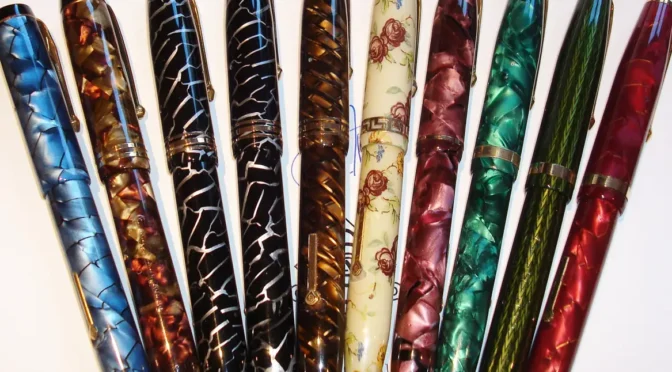
A good Conway Stewart is recognisable before it reaches the paper. The material has presence, the proportions are usually generous without becoming cumbersome, and the nibs often offer the kind of expressive, comfortable writing that makes a vintage fountain pen feel like a daily companion rather than a display piece. This Conway Stewart review considers where the marque excels, where caution is sensible, and which vintage examples deserve a closer look.
Why Conway Stewart still matters
Conway Stewart occupies a particularly appealing place in British pen history. Founded in London in 1905, the company produced writing instruments that were confidently styled, well made and aimed at people who wanted quality without necessarily buying into the most expensive imported names. Its best vintage pens combine a distinctly British character with practical design: warm, often colourful materials; traditional lever-filling mechanisms; and gold nibs that were made to be used.
For collectors, the attraction is not simply the name on the barrel. Conway Stewart offered a broad catalogue over several decades, from compact Dinkies to substantial 58-series pens and the admired 84 and 85 models. This makes the brand rewarding to collect by era, colour, size or filling system. For writers, it offers something equally valuable: a great many examples remain genuinely pleasurable tools once properly restored.
The strongest vintage Conway Stewarts have a personality that can feel absent from more anonymous, mass-market pens. They are rarely austere. Marbled, veined and hatched finishes give many models immediate visual charm, while black-and-gold examples retain a restrained formality suitable for everyday use.
Conway Stewart review: strengths and compromises
The principal strength is balance. Many vintage Conway Stewart fountain pens are large enough to sit comfortably in the hand, yet their light celluloid or acrylic constructions keep them from feeling tiring during longer writing sessions. A model such as the Conway Stewart 58 is often sought for precisely this reason. It has a full-sized, traditional silhouette and can make an excellent writer when fitted with a sound sac and a well-set nib.
Nib character is another reason the brand has a loyal following. Original gold nibs vary considerably, which is part of the appeal. One may be firm and fine for neat correspondence, another soft with a little spring, and a broader example may lay down a generous, characterful line. Buyers should avoid assuming that every nib will be flexible. Most are better understood as responsive everyday nibs rather than tools for dramatic copperplate calligraphy.
There are compromises. Vintage Conway Stewart pens were made in considerable numbers and condition varies widely. Discolouration, shrinkage, brassing and poorly executed repairs can affect both appearance and value. A pen that looks inexpensive may need substantially more work than its price suggests, particularly if the lever is corroded, the pressure bar has failed, or the section has been damaged by unsuitable ink or forceful dismantling.
The other consideration is cap fit. Celluloid and early plastics can distort over time, and a cap that no longer posts securely or seats correctly can change the whole experience of using a pen. These are not reasons to avoid the brand. They are reasons to buy with an informed eye and to favour properly assessed, restored examples.
The models collectors and writers seek
The Conway Stewart 58 is one of the most recognisable choices for a first serious vintage purchase. Its size, dependable lever-fill arrangement and broad range of finishes have made it a regular favourite. A clean example with a sound clip, crisp imprint and original gold nib has lasting appeal, particularly in attractive marbled colours.
Smaller pens deserve equal attention. Conway Stewart Dinkies are charming, practical pocket pens and an enjoyable way into the brand. Their compact dimensions will not suit every hand for lengthy writing, but they make handsome, usable additions to a collection. They also demonstrate how much care Conway Stewart put into proportion and finish at a smaller scale.
The 84 and 85 families tend to appeal to buyers looking for a little more presence. Depending on the particular variant and period, these can offer handsome scale, appealing patterned barrels and satisfying writing performance. As with all vintage model names, it is worth examining the actual pen rather than relying on a number alone. Trim, cap bands, material, nib imprint and size can differ between closely related versions.
Earlier Conway Stewart pens, including black hard rubber examples and eyedroppers, belong in a different collecting conversation. They can be historically important and visually handsome, but they are often less forgiving purchases for a newcomer. Originality, chasing, oxidation and feed condition matter greatly, and restoration should preserve rather than erase their age.
Original vintage pens versus later Conway Stewart production
A useful review must separate original vintage Conway Stewart production from pens made under later revivals of the name. Both can be desirable, but they serve different interests.
Classic pre-war and post-war pens appeal to those who enjoy British manufacturing history, period materials and the individuality of an original nib. Their value is tied closely to condition, rarity, colour and the quality of any restoration. They carry the small variations of hand-finished production and decades of survival.
Later Conway Stewart pens are generally more formal luxury objects, often made in limited editions with modern filling arrangements and more elaborate finishes. They may suit a buyer who wants a contemporary presentation pen bearing a famous British name. They should not, however, be judged by precisely the same standards as a 1940s or 1950s lever-filler. The experience, construction and collecting rationale are different.
For the enthusiast drawn to vintage writing, the earlier pens usually offer the stronger connection to everyday British penmanship. They were made for desks, pockets, letters and ledgers, and that intended usefulness remains evident when one is restored correctly.
What restoration should achieve
A restored Conway Stewart should retain its history without asking the new owner to accept avoidable faults. In a typical lever-filling pen, restoration means replacing the deteriorated ink sac, checking or renewing the pressure bar where required, cleaning the feed, setting the nib and ensuring the cap and barrel function safely together. The result should be a pen that fills, writes and empties as it ought to.
Cosmetic work requires more judgement. Gentle cleaning can reveal the depth of a marbled finish, but aggressive polishing can soften edges, diminish imprints and make a vintage pen look unnaturally glossy. Likewise, replacement parts should be disclosed where known. An honest restoration respects the pen as a collectible object as well as a writing instrument.
The nib deserves particular attention. A sound original nib may need only careful alignment and smoothing. A bent, cracked or heavily worn nib needs expert assessment, and occasionally the right decision is to leave a very rare pen for a specialist rather than force it into service. Fine adjustment can transform a reluctant writer, but no amount of polishing can recreate missing tipping or correct a serious structural fault without proper repair.
How to judge value before buying
Value in vintage Conway Stewart pens is rarely determined by model name alone. Desirable colour can make a material difference, as can an intact imprint, clean trim, original clip and a nib appropriate to the pen. Rarity helps, but a rare pen with shrinkage, staining or a compromised cap is not automatically a better purchase than a common model in excellent restored condition.
Ask whether you are buying primarily to write, collect, or give. A writer may sensibly choose a clean, well-restored 58 with modest wear over an untouched but unreliable example. A collector may prioritise an unusual finish, scarce variant or especially crisp original details. A gift buyer will usually gain more confidence from a pen that has been restored, tested and clearly described than from one sold merely as old.
Photographs should show the pen clearly from several angles, including the nib, cap lip, lever area and barrel imprint. Descriptions ought to state the filling system, dimensions where available, visible wear and restoration work. The more specific the information, the easier it is to decide whether a pen suits your expectations.
Is a vintage Conway Stewart worth buying?
For many people, yes. A well-chosen Conway Stewart offers a distinctive British fountain pen with real writing merit, often at a more approachable level than some of the most heavily collected overseas marques. It is especially compelling for someone who wants warmth of material, a gold nib with individual character and the satisfaction of using a piece of design history.
It is not the ideal choice for everyone. If absolute uniformity, cartridge convenience or a factory-perfect finish is essential, a modern pen may be the simpler route. If you enjoy a pen with visible history and want a restored instrument that rewards regular use, Conway Stewart is one of the most satisfying names to explore.
The best place to begin is not with the rarest colour or the highest asking price, but with a properly restored example whose size, condition and nib character suit the way you write. That is where a Conway Stewart stops being merely collectible and becomes a pen you will reach for.