
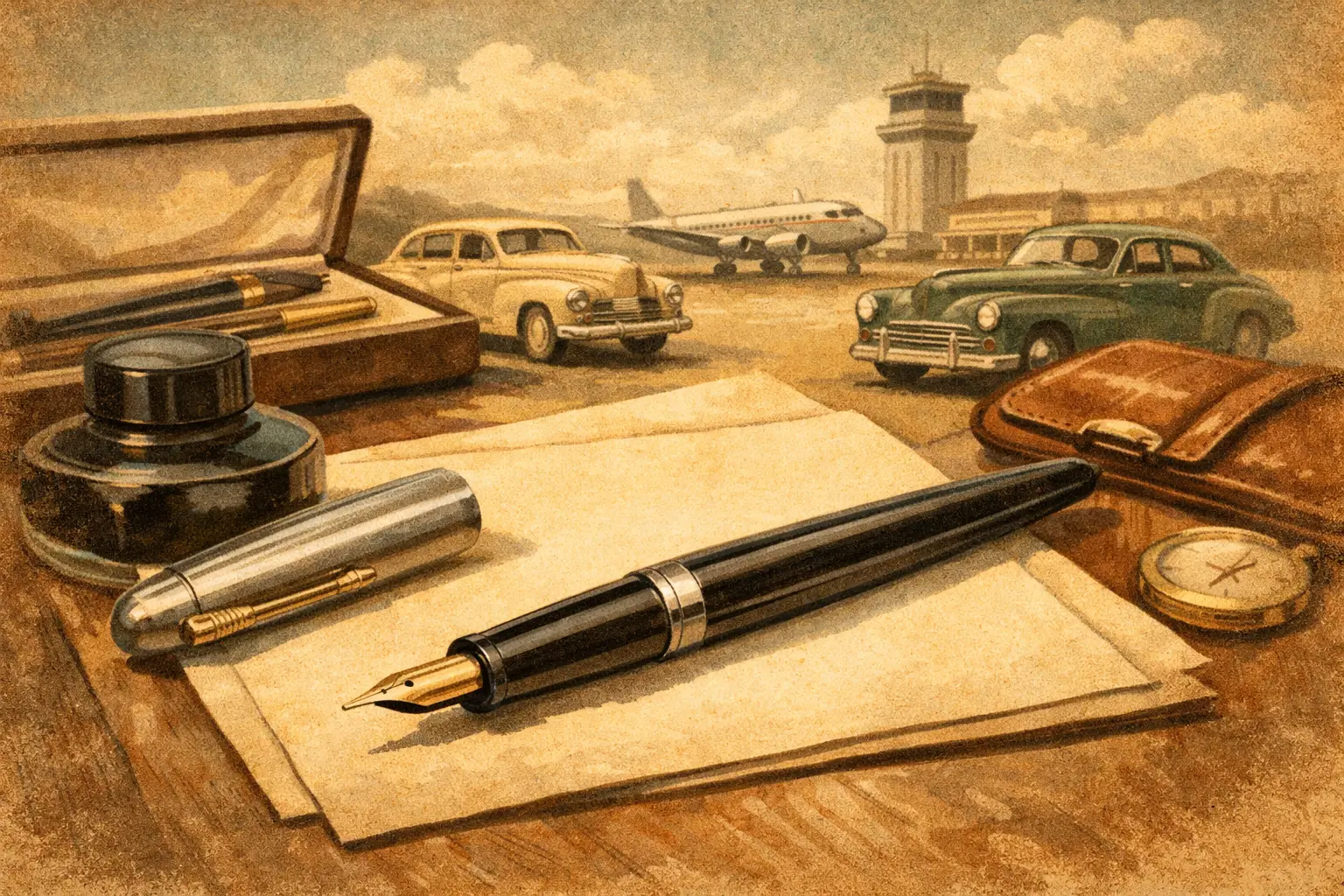
A Parker 51 vintage fountain pen can look almost understated beside a brightly marbled Duofold or a striped Vacumatic. That restraint is exactly the point. Its hooded nib, clean lines and dependable engineering made it one of the defining writing instruments of the twentieth century – and it remains an excellent choice for collectors who expect a vintage pen to earn its place on the desk.
For the buyer, the Parker 51 offers an unusually satisfying balance. It has genuine design history, a huge range of finishes and trim variations, and a writing character that suits everyday use. The important distinction is condition: a fine-looking example is not automatically a sound one. Understanding its filling system, originality and restoration requirements will help you buy with confidence.
Why the Parker 51 Became a Classic
Introduced in 1941 after an extended period of development, the Parker 51 was named to mark Parker’s fifty-first year. It arrived with a radically different appearance from the open-nib pens that came before it. The nib sits beneath a streamlined hood, leaving only a small writing point exposed, while the collector beneath the hood controls ink flow.
This construction was not merely a stylistic exercise. The protected nib helped reduce drying between uses and gave the pen its distinctive, practical character. A Parker 51 can be uncapped after several days and often write with little hesitation when correctly restored and filled. For someone moving from modern fountain pens, that reliability is a large part of the appeal.
The model was also built in considerable numbers and sold around the world, including versions made in England. That makes the 51 accessible, but not uniform. Collectability lies in the details: production period, cap material, filling system, nib grade, colour, imprint and overall condition all matter.
Parker 51 Vintage Fountain Pen Filling Systems
The first question when examining a Parker 51 is usually how it fills. There are two principal systems, and each has its own attractions.
Vacumatic-fill models
Early Parker 51s use the Vacumatic diaphragm filling mechanism. These are operated by removing the blind cap at the barrel end and pressing the plunger repeatedly while the nib is submerged in ink. They are especially appealing to collectors because they represent the original form of the model and have a direct connection to Parker’s earlier Vacumatic engineering.
A properly restored Vacumatic filler is an excellent system, but its diaphragm is a service item. A pen described simply as “working” may still need attention if the diaphragm is old, hardened or of unknown age. It is sensible to ask when it was restored, whether the diaphragm was replaced, and whether it has been tested with water or ink.
Aerometric-fill models
From the late 1940s, Parker introduced the Aerometric filler. Remove the barrel to reveal a pli-glass ink sac protected by a metal pressure bar. Pressing the bar compresses the sac; releasing it draws ink into the pen.
Aerometric Parker 51s are renowned for their durability and are often the more straightforward choice for regular writing. The system is easy to inspect once the barrel is removed, although an apparently intact sac can still be brittle, stained or poorly fitted. A restored example should have a sound sac, secure breather tube and a filler that draws and retains ink properly.
Neither system is automatically better. A Vacumatic-fill pen may be the more desirable historical choice, while an Aerometric is often ideal for a buyer seeking a practical daily writer. The best purchase is the one whose condition, provenance and purpose match your own.
What Makes One Parker 51 More Collectable?
The Parker 51 was produced over many years, so its value cannot be reduced to colour alone. Rarer colours and sought-after cap styles can command a premium, but originality and condition remain central.
Early examples may feature the Blue Diamond clip, a period detail associated with Parker’s lifetime guarantee. Wartime pens can have distinctive trim and cap characteristics. Later pens vary again, and British-made examples have their own interest for collectors who value Newhaven production. A clear barrel imprint and a cap that fits correctly add more than many buyers expect.
Caps deserve close attention. The familiar stainless steel Lustraloy cap is handsome, hard-wearing and widely available. Gold-filled caps, solid gold caps and less common decorative patterns take the pen into a different collecting category. Check for dents, deep scratches, worn plating, loose clips and damaged cap lips. A cap may be cosmetically attractive in photographs yet fail to clutch securely onto the pen.
Nib choice is equally personal. Most Parker 51s have a fine or medium tubular gold nib and deliver a controlled, firm line. Broad, oblique and italic examples are less commonly encountered and can be particularly appealing, provided the tipping is sound. The Special model, fitted with an Octanium nib rather than gold, is often a more affordable entry point. It can be a very good writer, though it will not carry the same collector status as a standard gold-nibbed 51.
Condition Checks Before You Buy
The hooded design conceals more than the nib, so condition needs specialist assessment rather than a quick visual judgement. The hood should be free from cracks, shrinkage and poorly matched colour. Hairline cracks around the clutch ring area are easy to miss, yet can affect both appearance and durability.
Look closely at the nib alignment. A Parker 51’s nib should sit correctly beneath the hood, with its tipping centred and its feed supplying ink evenly. It is possible for a pen to write, but write badly: scratchiness, hard starting, excessive wetness and a dry, starved line are all signs that adjustment or further restoration may be needed.
There are four useful questions to put to any seller of a restored pen:
- Has the filling system been serviced or replaced, and when?
- Has the nib been tested for smoothness, flow and alignment?
- Are the hood, barrel, cap and clip original to the pen?
- Are there cracks, dents, personal engravings or notable signs of wear?
A trustworthy description will distinguish between sympathetic polishing, necessary mechanical restoration and replacement parts. Restoration is not a flaw when it has been performed carefully. A new diaphragm or sac allows a classic pen to be used as intended. However, an undisclosed replacement hood, heavily polished cap or incorrect trim can affect collector value and should be reflected in the price.
Using a Restored Parker 51
A sound Parker 51 is not a pen that needs to remain in a cabinet. Its hooded nib and generous ink capacity make it particularly well suited to letters, journals, notes and daily correspondence. Many owners appreciate that the pen posts securely and feels balanced without being oversized.
Use sensible fountain pen ink rather than drawing ink, India ink or heavily pigmented calligraphy ink. A conventional, well-behaved ink makes cleaning easier and reduces the chance of dried deposits in the collector and feed. If the pen will be unused for some time, empty it and flush it with clean water until the water runs clear.
The 51 does have a distinctive writing feel. Its tubular nib is generally firm, so buyers expecting expressive line variation from pressure may prefer a flexible earlier pen. What it offers instead is precision, composure and a remarkably consistent line. It is the sort of pen that disappears into the act of writing.
Choosing the Right Example
For a first Parker 51, a restored Aerometric model with a clean Lustraloy cap and a medium gold nib is often the sensible place to begin. It delivers the essential 51 experience without asking the buyer to pay for scarce trim or a rare colour. For a more established collection, an early Vacumatic-fill example, a desirable cap pattern or a less usual nib can add real interest.
Gift buyers should favour condition and usability over rarity. A carefully restored pen in a pleasing colour, presented honestly and ready to fill, makes a far better gift than an uncommon example with uncertain mechanics. Collectors, meanwhile, may reasonably accept minor cosmetic wear in exchange for an early date code, correct period details or an unusually crisp imprint.
At Heritage Collectables, the most rewarding vintage pens are selected not only for what they are, but for how they will perform after restoration. A Parker 51 should invite you to write the next page, not leave you wondering whether the ink system will survive the first line.