Category Archives: Uncategorised

Best Ink for Vintage Fountain Pens

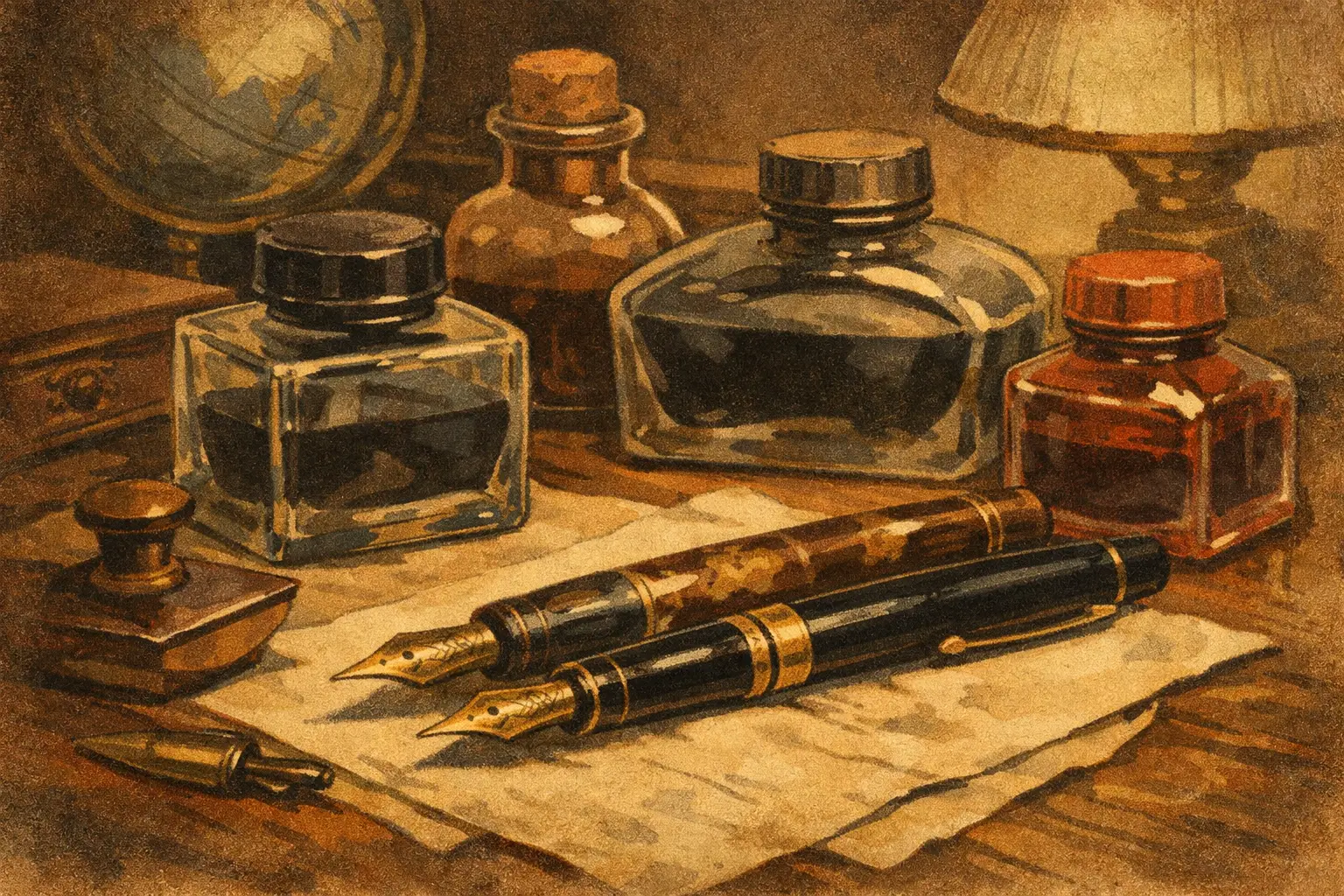
A vintage fountain pen can write beautifully for another century, but the wrong ink can make a well-restored pen feel fussy, dry or downright troublesome. Choosing the best ink for vintage fountain pens is less about chasing the brightest colour on the shelf and more about respecting the pen’s age, materials and filling system.

That matters whether you have a treasured Parker Vacumatic, a lever-filling Conway Stewart, a celluloid Waterman or a hard rubber eyedropper that spends more time in a pen tray than in a jacket pocket. Older pens were designed around inks that were generally simpler, gentler and easier to flush than many modern specialist formulations. If you want dependable daily use, ink choice is part of the restoration story.

What makes the best ink for vintage fountain pens?

The short answer is this: a safe vintage ink is usually well-behaved, dye-based, moderate in saturation and easy to clean out. That may sound less exciting than shimmer, sheen and dramatic waterproof claims, but older pens reward restraint.

Vintage feeds and sacs do not always cope well with heavily saturated inks. Dense dyes can leave residue in narrow feed channels, and pens with older tolerances may show hard starts more quickly than a modern cartridge pen. If a pen has a latex sac, cork seal or older piston components, the ideal ink is one that flows reliably without staining, crusting or demanding aggressive cleaning.

In practical terms, the best candidates are conventional fountain pen inks from established makers with a long reputation for consistency. You want an ink that starts easily, cleans out with water and does not linger in the pen if it sits unused for a week or two.

Why vintage pens need a more cautious approach

Not every old pen is fragile, and many restored examples are perfectly capable of regular writing. Even so, vintage pens are a category where material history matters.

A 1930s pen may have hard rubber parts that can discolour. A 1940s lever filler may rely on a fresh sac, but still use an older feed design. A piston-filler from mid-century Europe may be mechanically sound, yet less forgiving of high-maintenance inks than a modern demonstrator made for frequent flushing.

This is why ink recommendations cannot be reduced to brand loyalty alone. The pen’s nib, feed, filling system and internal materials all influence what works best. The safest approach is to match a pen of historical value with an ink of low drama.

Inks that are usually safest

For most restored vintage fountain pens, standard washable fountain pen inks are the sensible place to start. Traditional blues, blue-blacks and blacks from reputable brands tend to behave predictably. They offer good lubrication, consistent flow and straightforward cleaning.

Blue is often the first recommendation because it is practical and generally less troublesome than intense reds, oranges or highly saturated purples. Blue-black is popular with collectors because it looks period-appropriate in many pens and suits everyday writing without feeling bland. A classic black can also work well, provided it is a standard dye-based formulation rather than a permanent or pigmented one.

If you enjoy colour, muted greens, browns and burgundies can be excellent choices, but it is wise to stay with conventional inks rather than boutique formulations designed for maximum visual effect. The more an ink advertises shimmer, sheen, permanence or extreme saturation, the more cautious one should be with vintage mechanisms.

Inks to avoid in vintage fountain pens

Some inks are better left to modern pens that can be dismantled easily and cleaned often. Pigmented inks are a common example. They can perform well in the right pen, but particles that remain suspended in the liquid raise the cleaning burden and the risk of clogging. That is not ideal in a vintage pen with a delicate feed or a sac system.

Iron gall ink deserves a more nuanced view. Traditional iron gall formulations have a long history, and some modern versions are gentler than their reputation suggests. Even so, they are not usually the first choice for an older pen unless you know the pen, the ink and your cleaning routine very well. For most owners, especially those buying a restored pen to enjoy rather than experiment with, easier options are available.

Shimmer inks are another category best avoided. The glitter particles may look charming in a swab card, but they can settle in feeds, collect in sacs and create needless maintenance. Highly sheening inks can also be troublesome, as they tend to be more concentrated and can dry out on the nib more readily.

Calligraphy ink, dip pen ink and drawing ink should never go into a fountain pen, vintage or otherwise. That mistake has ruined more than a few otherwise good pens.

Matching ink to filling system

The best ink for vintage fountain pens also depends on how the pen fills.

Lever fillers and button fillers are often happiest with easy-cleaning, conventional inks. Because you cannot inspect the inside as readily as with some modern converters, it makes sense to use inks that flush out without fuss.

Vacumatic and other diaphragm or vacuum-based systems can hold generous quantities of ink, which is part of their appeal. That also means any problematic ink remains in the pen longer and passes repeatedly through the feed. A stable, low-maintenance ink is the wise option here.

Piston fillers vary. Some mid-century pistons are robust, but many collectors still favour straightforward inks for them, especially if the pen is valuable or difficult to service. Eyedroppers deserve particular care, not because they are weak, but because they often invite long fills and prolonged contact between ink and pen material.

In every case, the more awkward the pen is to clean, the more conservative the ink choice should be.

Colour versus caution

Collectors often ask whether playing safe means settling for dull ink. Not at all. It simply means choosing colour in a measured way.

If you want an everyday pairing for a vintage pen, think elegant rather than dramatic. A deep royal blue, a restrained blue-black, a warm sepia or a traditional racing green can all look superb in a period pen. These colours tend to suit vintage nib character as well. Older nibs often produce expressive line variation and subtle shading without needing an ink that does all the work.

There is also a visual harmony to consider. A jade celluloid pen with a soft green ink or a black chased hard rubber pen with a sober blue-black can feel exactly right. For many enthusiasts, that sense of period character is part of the pleasure.

Signs your ink is not a good match

Even a generally safe ink may not suit every pen. Vintage pens are individuals, and some combinations simply perform better than others.

If a pen becomes hard to start after only a short rest, writes noticeably drier than expected, develops residue around the nib, or is much harder to flush than usual, the ink may be the issue. Likewise, if colour appears to stain the section or ink window more than expected, it is sensible to stop using it.

None of this necessarily means damage has been done. Often it simply means the pen would be happier with a less saturated, more free-flowing alternative. One of the pleasures of fountain pens is tuning the pairing until the writing experience feels right.

A practical rule for collectors and daily users

If the pen is rare, freshly restored, historically significant or difficult to replace, use your calmest, most dependable ink. Save the experimental colours for modern pens. That is not timid advice. It is collector common sense.

A well-restored vintage pen should be enjoyable, not stressful. At Heritage Collectables we see again and again that owners get the best long-term performance when they keep both maintenance and ink choice straightforward. The pen itself is the star. The ink should support it, not test it.

How often should you flush a vintage pen?

With a conventional dye-based ink in regular use, flushing every few weeks is a sensible routine, or sooner if the pen is being put away. If you change colours, flush thoroughly. If a pen will sit unused, empty it rather than leaving ink to concentrate inside.

This is particularly worthwhile with vintage pens because dried residue can be more awkward to remove from older feeds and filling systems. Gentle maintenance is better than corrective maintenance.

The best ink choice is often the least exciting one

That may sound unfashionable, but it is true. The best ink for vintage fountain pens is usually the one that lets an eighty-year-old pen start first time on a Monday morning, write smoothly through a page of correspondence and rinse out without protest.

There is real pleasure in that kind of reliability. A vintage pen connects you with workmanship, design and writing habits from another era. Choosing a sensible ink keeps that connection practical, not precious – and makes it far more likely that your pen will be used, not merely admired.
Choosing a Fountain Pen Storage Case

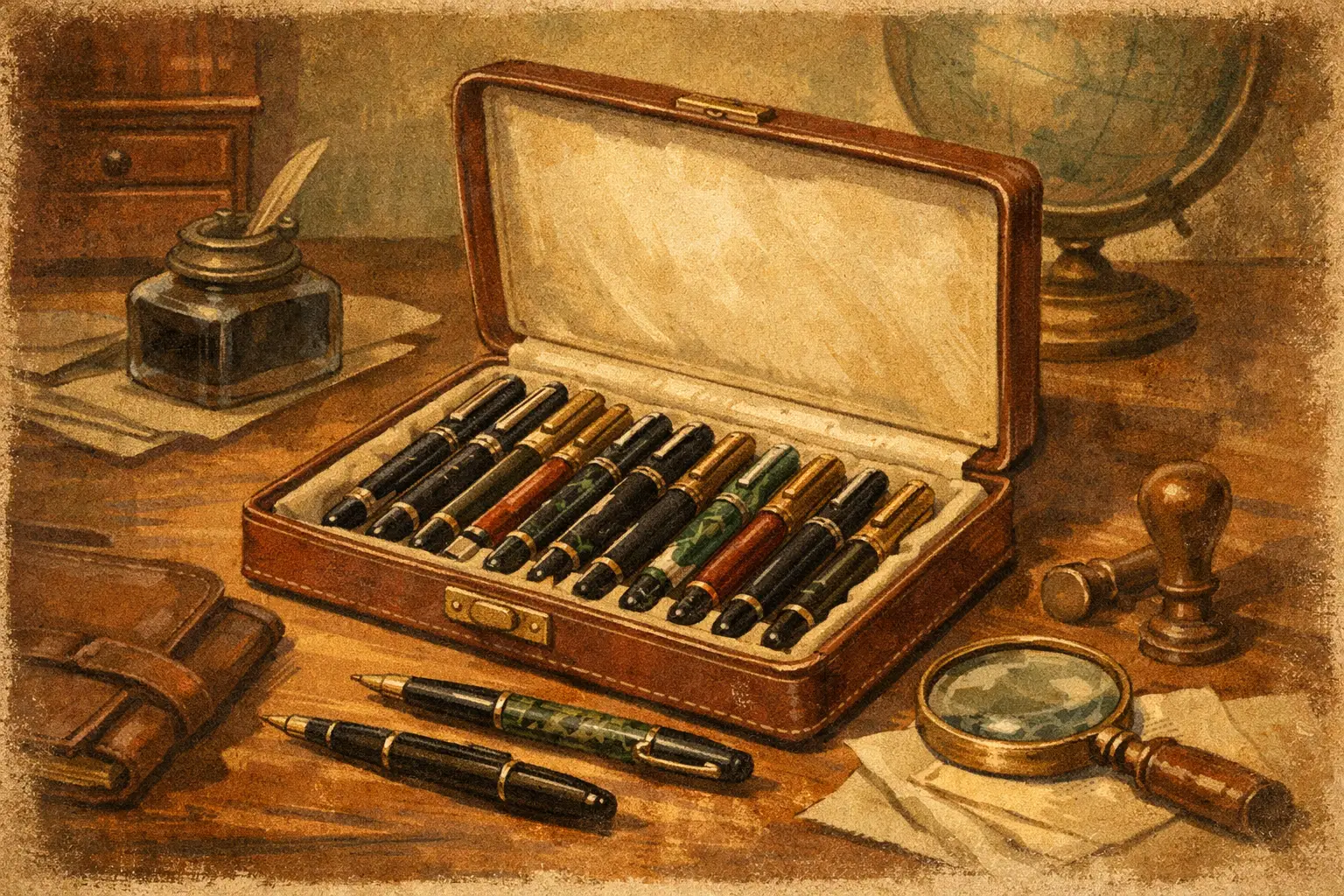
A fine pen rarely suffers from dramatic neglect. More often, it is slow wear that does the damage – a cap rubbed against another barrel, a clip pressed into celluloid, a sac lever catching on a tray lining, or sunlight quietly dulling a once-rich finish. That is why a good fountain pen storage case matters. It is not merely a tidy way to keep a collection together. It is part of how you preserve condition, protect restoration work, and keep pens ready to use.

For collectors and daily users alike, storage sits somewhere between maintenance and presentation. The right case should shield a pen from knocks and abrasion, but it should also suit the way you actually live with your collection. A single treasured Waterman used at a desk needs something different from a dozen restored Parkers rotated through the week, and different again from a travelling selection carried to meetings or pen shows.

What a fountain pen storage case should do

At its simplest, a fountain pen storage case should prevent movement, reduce contact between pens, and keep dust, moisture, and stray impacts at bay. That sounds straightforward, but the details matter. A loose slot can allow a pen to shift and wear at the high points. A rough interior can mark delicate chased hard rubber. A case that looks handsome on a shelf may be rather poor for travel if the contents jostle when carried upright.

For vintage pens, materials and fit deserve even closer attention. Many older pens have finishes that are less forgiving than modern injection-moulded resins. Casein, celluloid, chased rubber, rolled gold fittings, and plated trim can all react badly to pressure, damp, or friction over time. A storage case should protect the pen you have, not the average pen imagined by a generic manufacturer.

There is also the practical matter of accessibility. If a case is awkward to open, overpacked, or too precious for ordinary use, pens tend to end up elsewhere – in drawers, coat pockets, glove compartments, and the bottom of bags. That is where avoidable damage begins.

Case, tray, box, or roll?

Not every collector needs the same format, and this is where many buyers go wrong. They look for the most attractive option rather than the most suitable one.

A rigid hinged case is often the best all-round choice for a small to medium grouping. It protects well, travels reasonably if well made, and gives each pen a defined place. If you keep restored pens in rotation and want them close at hand, this format offers a sensible balance of security and convenience.

A display box or glazed case suits a study, writing desk, or cabinet where visibility matters. These are appealing if you enjoy seeing your collection rather than keeping it shut away. The trade-off is that display-friendly storage is not always ideal for transport, and if the box is left in direct light it can do more harm than good. Vintage materials in particular prefer stable conditions and shade.

A pen roll has obvious appeal for travelling, especially if you carry a changing selection. It can be compact and elegant, and a well-made example keeps pens separate without adding much bulk. The drawback is pressure. If the roll is overfilled or packed into a crowded bag, clips and barrels can still be stressed.

Desk trays and drawer inserts are excellent for larger collections, particularly when paired with a cabinet. They make browsing easy and suit collectors who like to group by maker, era, or filling system. They are less useful if you need something portable or if your household storage is exposed to dust and fluctuating temperatures.

Materials matter more than many buyers realise

The outer covering of a case is largely a matter of taste, but the interior is critical. Soft linings are generally kinder to polished barrels and plated trim, provided they are clean, colourfast, and not overly abrasive. A plush lining may look luxurious, but if fibres shed or seams sit against the pen body, it is not doing the job properly.

Leather cases are a classic choice and often wear beautifully, but the quality varies enormously. Good leather gives structure and ages well. Poor leather can dry, crack, or transfer finish. If the interior is also leather, it must be smooth and well finished. For many pens, especially those with more delicate surfaces, a softer lined compartment is preferable.

Wooden boxes can be handsome and collector-friendly, particularly for home storage. They feel substantial and suit the character of vintage pens. What matters is how the interior is built. Bare wood, hard dividers, or rough-cut slots are all risks. A well-lined wooden case can be excellent. A badly finished one is simply a smart-looking source of scratches.

Synthetic materials are not automatically inferior. A well-made modern case can offer stability, lightness, and good impact resistance. What matters is not whether the material sounds traditional, but whether it protects the pens without introducing new hazards.

Sizing and fit for vintage and modern pens

One common mistake is assuming all fountain pens fit all cases. They do not. Vintage pens in particular vary enormously. A slender 1930s lever filler has different needs from an oversized modern piston filler, and both differ again from a safety pen or a model with an unusually prominent clip.

A proper fit means the pen sits securely without being pinched. Too much room invites movement. Too little can stress cap bands, clips, and barrel ends. If a pen must be pushed into place, the slot is too tight. If it rattles about, it is too loose.

Collectors with mixed holdings should think carefully before buying a fixed-format case in large numbers. A case designed around six broad modern pens may swallow smaller vintage models in a way that offers little real protection. Conversely, narrow loops or partitions can be unsuitable for larger pens from Montblanc, Pelikan, or later Parker lines.

Storage for inked pens and pens at rest

A fountain pen storage case also needs to suit how the pen is used. Pens kept inked and in regular rotation benefit from quick access and stable positioning. For most modern and restored vintage fountain pens, horizontal storage is a sensible default when the pen is not in use. It reduces the chance of ink concentrating unevenly at one end over extended periods.

That said, it depends on the pen, the ink, and the length of storage. A pen filled for daily writing can rest in a case between uses without much concern if it is sound and properly maintained. A pen being stored long term is another matter. It should generally be cleaned, dried, and put away empty in a stable environment.

Cases are not a cure for poor pen hygiene. Even the finest storage will not compensate for ink left to dry in a feed or a sac stored half full for months.

Choosing by purpose, not impulse

If you are buying a case for one or two prized pens, presentation and finish may take priority. If you are storing a working rotation, convenience matters more. If you travel frequently, secure closure and compact dimensions become essential. For a larger collection, consistency across several cases or trays can make organisation much easier.

It is also worth thinking ahead. Many collectors begin by needing storage for three pens and find themselves, before long, looking for room for twelve. Buying a case with a little sensible capacity can save replacing it too soon, though buying one vastly larger than required can leave pens under-supported if the design is poor.

Those who collect restored vintage pens often do well to separate categories. Everyday users can sit in a practical desk case, while rarer or more delicate examples are kept in more protective home storage. There is no rule that one case must do everything.

Signs of a poor fountain pen storage case

A disappointing case usually reveals itself quickly. The lid presses against clips. Pens touch when closed. Stitching sits proud inside the compartment. The lining smells strongly of adhesive or dye. Dividers flex or bend. The closure feels insecure. None of these are trivial faults.

For collectible pens, especially examples with original finish and crisp chasing, a mediocre case is often worse than careful open-shelf storage in a controlled room. Good storage should reduce risk, not merely disguise it behind polished leather or a velvet lid.

If you buy remotely, study dimensions closely and be realistic about the pens you intend to store. Generic descriptions such as suitable for fountain pens can be misleading. A specialist seller with real familiarity in vintage instruments will usually understand why barrel girth, clip height, and material sensitivity all matter.

A case should support the pleasure of ownership

The best storage has a quiet quality to it. It keeps a pen safe, presents it well, and makes you more likely to reach for it. That may sound simple, but it is exactly right. A fountain pen should not feel like an object you are forever rescuing from unsuitable storage.

Whether your interest lies in restored daily writers or carefully chosen collector pieces, the right case is part of responsible ownership. Choose with the pen in mind, not just the appearance of the box, and you will protect both condition and enjoyment for years to come. If you are building a collection with care, it is worth giving the same care to where those pens rest between pages.

Antique Pen Stands Worth Buying

A good pen deserves better than being dropped in a drawer. That is why antique pen stands still earn their place on a desk, not simply as decorative survivors, but as practical pieces that bring order, weight and period character to the writing experience. For collectors of fountain pens, dip pens and pencils, the right stand can complete a display and make daily use feel that bit more intentional.

Why antique pen stands still matter

There is a difference between a desk accessory and a desk piece. Modern holders often do the basic job, but antique pen stands were made in an age when the writing table was part of the room’s furniture and not an afterthought. Materials were chosen to last, bases were weighted properly, and the design usually balanced utility with presence.

That matters to collectors because a pen stand is rarely isolated from the rest of the collection. A Victorian brass stand beside a chased silver propelling pencil, or an early 20th-century onyx base supporting a black chased hard rubber pen, creates a more coherent setting than a generic modern tray ever could. For many buyers, that sense of historical fit is half the appeal.

There is also the practical side. Antique pen stands help prevent rolling, reduce desk clutter and give fragile or restored writing instruments a designated resting place. If you regularly rotate pens, they can be far more useful than a case that spends most of its time closed.

What counts as an antique pen stand?

The term is used rather loosely, so it helps to be clear. In the strict trade sense, an antique is usually over 100 years old. In the broader collecting market, however, buyers often use antique pen stands to include late Victorian, Edwardian and early to mid-20th-century desk stands as well.

That wider use is understandable because the style continuity is strong. A 1910 dip pen stand, a 1920s desk set base and a 1930s fountain pen rest may all appeal to the same collector. The line between antique and vintage matters for cataloguing and valuation, but for a buyer choosing a desk piece, condition, design and suitability are often more important.

The main types of antique pen stands

Some stands were designed for dip pens and nibs, others for fountain pens, and some sat within larger desk sets that included inkwells, letter racks or blotters. Knowing the original purpose helps you avoid buying something handsome but awkward to use.

Dip pen stands and inkwell bases

Victorian examples often combine a pen rest with one or two inkwells. These can be made from brass, cast iron, ceramic, wood, marble or pressed glass. They suit collectors of nib holders and dip pens particularly well, although some can also accommodate slimmer fountain pens.

The advantage here is atmosphere and function in equal measure. If you actually write with dip pens, a stand with inkwells remains one of the most satisfying ways to keep the desk ready for use. The trade-off is footprint. These pieces can be heavy and need proper space.

Fountain pen stands and rests

As fountain pens became more common, desk accessories changed with them. Stands from the early 20th century onward often feature grooves, cradles or upright supports shaped for thicker barrels. Some were made as brand-linked desk pieces, while others were more general luxury accessories in onyx, chrome, bakelite or timber.

These are usually the most practical choice for modern collectors who want easy access to one or two pens without committing to a full desk set. They also tend to fit better into everyday home offices.

Multi-pen desk stands

Larger stands designed for several pens can be excellent for display, especially if you collect by brand, era or colourway. A row of restored fountain pens on a period stand presents far better than a random cluster on a shelf.

That said, spacing matters. Not every antique stand suits oversized modern pens or later vintage models with broader girth. Measurements should always come before impulse.

Materials, workmanship and what they tell you

The material of a stand affects more than appearance. It often points to date, intended market and likely durability.

Brass examples are popular because they age attractively and tolerate regular use. Marble and onyx stands offer impressive weight and visual presence, though chips around the edges are common. Wooden stands can be warm and understated, but they need closer inspection for splits, warping and old repairs. Silver and silver-plated pieces bring refinement, yet condition can vary widely, especially where plating has worn through on contact points.

Cast iron desk stands, often japanned or painted, can be wonderfully characterful. They also tend to survive in decent structural condition, although surface losses are expected. Glass and ceramic examples can be beautiful, but they are less forgiving if you want something for daily handling.

Workmanship matters just as much as material. Sharp casting, properly aligned fittings, clean thread work on inkwell mounts and well-finished pen rests usually indicate a better piece. Crude joins, replacement screws and badly polished surfaces suggest a stand that has had a harder life or less careful restoration.

How to assess condition before you buy

Condition is where enthusiasm needs a little discipline. Antique pen stands are functional objects, so honest wear is normal. The question is whether that wear is attractive, manageable and accurately reflected in the price.

Look first at stability. A stand should sit flat and feel secure. If it rocks on the desk, the issue may be minor, but it can also point to a warped base or previous damage. Then inspect the pen rests themselves. A shallow chip on a marble edge may be acceptable; a repaired break where the pen actually sits is more serious.

On stands with inkwells, check whether liners, lids and hinges are original or at least period-appropriate. Replacements are not always a deal-breaker, especially if you want a usable piece, but mismatched parts reduce collector appeal. For metal stands, patina is usually desirable. Over-polishing can erase detail and leave a piece looking oddly lifeless.

If a stand is sold as restored, the restoration should support the object rather than overwhelm it. Gentle cleaning, sympathetic surface work and careful structural repair are one thing. Heavy lacquer, modern-looking repainting or glued joins hidden under fresh polish are another.

Buying antique pen stands for use or display

It helps to decide which matters more before you buy. If the stand is mainly for display, you can prioritise period style, visual balance and rarity. If it is for daily use, dimensions, stability and ease of access become more important.

A collector focused on Victorian dip pens may rightly choose a more elaborate stand with inkwells and decorative casting. Someone using restored fountain pens every morning may be better served by a simpler early 20th-century rest with enough width and weight to hold modern vintage pens safely.

There is also the question of desk scale. A large stand can look magnificent in photographs and completely dominate a modest writing table. Equally, a tiny pen rest may disappear beside a substantial leather desk pad. Good buying is often about proportion rather than grandeur.

Matching a stand to your collection

The best antique pen stands do not fight with the pens placed on them. They frame them.

Dark hard rubber, chased silver, mottled celluloid and lacquered finishes all respond differently to surrounding materials. Black pens often look superb on pale onyx or marble. Gold-filled and brass-trimmed pens pair naturally with warm-toned metal stands. Rich wood can suit almost anything, though heavily figured bases can sometimes distract from the instrument itself.

Brand and period matching can also be rewarding. A stand from the same broad era as your pens creates a stronger visual story, even if it is not a branded set. For specialist buyers, that coherence is often more satisfying than chasing the rarest object in isolation.

Where confidence matters most

Desk accessories are sometimes treated as the easy end of the antiques market, but poor descriptions and careless restoration are just as common here as with pens themselves. Chips hidden in dim photographs, married parts, unstable bases and optimistic dating all appear regularly.

That is why specialist knowledge matters. A seller who understands writing instruments will usually describe a stand in terms that are actually useful to pen buyers, such as width of rests, suitability for fountain pens, completeness of inkwells and whether a piece is best for use or display. At Heritage Collectables, that specialist approach matters because collectors are rarely buying a stand in isolation. They are buying part of a desk, part of a display and part of the pleasure of writing.

Are antique pen stands a good buy?

Usually, yes – provided you buy with the same care you would apply to a vintage pen. Many remain relatively affordable compared with the pens they accompany, which makes them one of the more accessible ways to add depth to a collection. They also make thoughtful gifts for writers and collectors who already own fine instruments but have not yet given much thought to presentation.

The caveat is simple. Buy the right stand, not merely an old one. Age without suitability is just clutter. The best pieces still do what they were made to do, and they make the desk feel complete when they do it.

If you are building a writing collection with real character, an antique pen stand is not an optional extra. It is often the piece that brings the whole arrangement into focus.

How to Clean an Inkwell Properly

A neglected inkwell tells on itself quite quickly. Old ink cakes around the neck, sediment gathers at the base, and what should be a practical desk piece becomes something you hesitate to use. If you are wondering how to clean an inkwell without damaging the glass, metal mount or ceramic body, the good news is that the job is usually simple – provided you match the method to the material and the age of the piece.

For collectors and regular users alike, restraint matters more than force. Many inkwells survive for well over a century, but they do not respond kindly to harsh chemicals, metal tools or overconfident scrubbing. The aim is not to make a Victorian desk accessory look factory fresh. It is to remove residue, preserve the finish and keep the inkwell ready for display or use.

How to clean an inkwell without causing damage

Start by identifying exactly what you are cleaning. A plain glass inkwell with no fittings can tolerate more than a cut-glass example with a hinged brass lid, and both are very different from porcelain, pressed glass or silver-mounted pieces. If the inkwell has cracks, loose mounts or signs of old repairs, treat it as a delicate restoration project rather than routine cleaning.

Before doing anything else, empty out any loose debris and dried flakes. Turn the inkwell upside down over a lined surface so that any hardened ink falls onto something soft rather than into a sink. Never knock the rim against a hard edge. That is an easy way to turn a sound antique into a chipped one.

In most cases, lukewarm water is the correct first step. Fill the well partially, allow it to sit for a short while, then gently swirl to loosen old ink. If the residue is heavy, repeat rather than forcing the process. Dried fountain pen ink and dip pen ink often soften gradually, and patience usually achieves more than aggressive cleaning.

A cotton bud, soft cloth or a very soft bottle brush can help with the interior, but only if the opening allows safe access. If you have to force a brush through the neck, do not use it. Fine rims and threaded collars are vulnerable, especially on older examples.

The safest cleaning method for most inkwells

For a straightforward clean, use lukewarm water with a drop of mild washing-up liquid. That is enough for many glass and ceramic inkwells that have ordinary dried ink inside. Swirl the solution gently, leave it to loosen the residue, and rinse thoroughly until the water runs clear.

If staining remains, try soaking the inkwell for longer rather than increasing chemical strength. Several short soaks are often safer than one prolonged treatment, particularly where metal lids or internal fittings are attached. If the inkwell has a non-removable metal top, keep prolonged soaking to a minimum. Water trapped around hinges, collars and screws can encourage corrosion.

Stubborn residue around the mouth of the well can usually be lifted with a damp cotton bud. Work slowly and replace the bud as it darkens. Rubbing old ink back over the surface is pointless, and on gilt or plated mounts it can become abrasive.

Once clean, dry the inkwell fully before refilling or returning it to a cabinet. Air drying upside down on a soft towel works well for plain glass. Mounted pieces should be dried more carefully, using a cloth to remove moisture from seams and fittings.

Cleaning vintage inkwells by material

Material matters, and this is where many avoidable mistakes begin.

Glass inkwells

Glass is usually the easiest material to clean, but decoration changes the approach. Clear or plain coloured glass tolerates gentle washing well. Cut glass needs more care around sharp edges, where cloth fibres and cotton can catch. If the glass is iridescent, flashed, enamelled or gilded, avoid anything abrasive and do not assume the decoration is stable.

Cloudiness can be a separate issue from dirt. If the interior looks permanently hazy after cleaning, you may be seeing etching rather than residue. That will not wash away, and trying to polish it out from inside often does more harm than good.

Ceramic and porcelain inkwells

Ceramic inkwells often hold staining more stubbornly than glass, especially if the glaze is crazed. Water and mild soap are still the starting point, but avoid long soaking if the body has fine cracks. Moisture can work into old damage and weaken it further. Hand-painted decoration and gilt rims should be treated gently and never scrubbed.

Metal and mounted inkwells

Brass, silver plate and pewter mounts add character, but they complicate cleaning. If you can separate the glass liner from the stand or collar safely, do so. Clean each part individually. If you cannot, keep water exposure controlled and dry the metal promptly.

Do not use silver dip, metal polish or household cleaners inside an assembled inkwell unless you are completely certain of the materials involved. Residue can lodge in joints and be difficult to remove. Polishing the exterior metal is a separate task from cleaning the ink chamber, and the two should not be muddled together.

What to avoid when you clean an inkwell

When people ask how to clean an inkwell, they usually expect a cleaning product recommendation. More often, the best advice is what not to use.

Avoid boiling water. Sudden temperature change can stress old glass and open up hairline cracks in ceramic bodies. Avoid bleach, strong vinegar solutions and ammonia-based cleaners, especially on mounted or decorated pieces. These can affect finishes, loosen adhesives from old repairs and create problems that were not there to begin with.

Wire brushes, knives, dental picks and abrasive scourers have no place here. They may remove ink, but they can also scratch interiors, chip rims and strip surface detail. Even rice, salt or other internet favourites used as a shaking abrasive can mark softer interiors or catch in damaged areas. A valuable inkwell is not improved by improvisation.

It also depends on whether the inkwell is meant for use or display. A purely decorative piece with stable staining inside may be better left alone if cleaning risks disturbing fragile mounts or period patina. Collector judgement matters.

Dealing with very stubborn dried ink

Some inkwells have been left charged for decades, and the residue sets almost like varnish. In these cases, repeated soaking with lukewarm water is still the safest route. Let the water soften the deposit, empty it, and repeat over a few days if necessary.

For heavy build-up in plain glass only, a little extra washing-up liquid and gentle agitation can help. If the opening is wide enough, a soft baby bottle brush may shift softened material without scratching. Narrow-necked antique examples are trickier. If access is poor, forcing tools inside is usually riskier than accepting a faint stain.

If the piece is valuable, unusual or structurally compromised, professional restoration is the sensible choice. That is especially true for inkwells with silver lids, internal liners, sprung fittings, enamel plaques or evidence of previous repair. Cleaning is not difficult, but conservation judgement is a separate skill.

Keeping an inkwell clean after restoration or regular use

A clean inkwell stays clean more easily if you avoid letting ink dry inside it. If you use one on the desk, refresh the ink regularly and wipe the lip before replacing the lid. Old overflow around the neck is what creates the hard black collar collectors know too well.

Do not fill the reservoir more than you need. Smaller quantities are easier to monitor, and they reduce the chance of evaporation leaving concentrated sediment behind. If you rotate between pens, it is often better to keep the inkwell empty between sessions unless you use it frequently.

Storage also makes a difference. Keep the piece out of direct sunlight, away from radiators, and somewhere stable where it cannot be knocked. A restored writing desk accessory deserves the same basic care as a vintage fountain pen – clean hands, sensible handling and no heroic shortcuts.

At Heritage Collectables, we spend a great deal of time looking at the small details that separate careful stewardship from accidental damage. An inkwell may seem simpler than a pen, but the principle is the same: preserve first, clean second, and let the object keep its history without asking it to survive avoidable mistakes.

If your inkwell still looks used after a careful clean, that is not always a fault. Sometimes it is simply honest age, and there is a good deal of charm in that.

Victorian Dip Pens and Nibs Explained

A good Victorian dip pen tells you almost everything before it touches ink. The balance sits differently in the hand, the holder material has a distinct feel, and the nib – if original and sound – offers a writing character that modern mass-produced steel rarely matches. For collectors and everyday users alike, Victorian dip pens and nibs occupy a particularly rewarding corner of the writing world because they sit at the meeting point of history, design and practical use.

Unlike many antiques that end up as display pieces, a well-chosen Victorian dip pen can still do exactly what it was made to do. That is part of the attraction. These are objects from an age when handwriting was not a hobby or a luxury affectation, but a daily necessity in business, correspondence and education. The result is a category with real depth: decorative holders, highly specialised nibs, precious materials, everyday school examples and finely made desk pieces all survive, often in surprising variety.

What makes Victorian dip pens and nibs distinctive

The Victorian period saw enormous development in writing technology. Earlier quills and rudimentary metal pens gave way to more refined, machine-made steel nibs that were affordable, reliable and widely distributed. That shift matters because it turned dip writing from a relatively inconsistent experience into something more standardised, while still allowing a remarkable range of writing styles.

Victorian dip pens and nibs are distinctive not simply because they are old, but because they reflect a period of experimentation and specialisation. Makers produced nibs for copperplate, book-keeping, school work, legal writing and ornamental hands. Holders ranged from plain turned wood to ivory, mother-of-pearl, silver, gutta-percha and elaborate novelty forms. Some were made for regular office use. Others were clearly intended as presentation pieces or genteel desk accessories.

For the collector, that variety creates scope. For the writer, it means there is no single Victorian dip pen experience. One nib may feel springy and expressive, another controlled and firm. One holder may suit occasional use, while another remains comfortable enough for longer writing sessions.

Why collectors still seek Victorian dip pens and nibs

Part of the appeal is visual. Victorian penmakers understood ornament, and even utilitarian examples can show impressive detail. Engine-turned metalwork, carved holders and shaped nibs all have obvious display value. Yet appearance alone is not the whole story.

Collectors are also drawn to maker history, manufacturing quality and rarity. Certain nib boxes, holder materials or patented fittings are harder to find than others. Some enthusiasts concentrate on a single manufacturer, while others build around themes such as novelty dip pens, travelling pens, desk sets or figural holders. There is also a strong crossover appeal for those who collect inkwells, pen trays and writing boxes, since Victorian dip pens rarely existed in isolation.

Usability adds another layer. A restored and carefully assessed piece can still provide a direct connection to nineteenth-century writing practice. That matters to buyers who do not want a cabinet object alone, but something with life left in it. As with vintage fountain pens, condition and correct description are crucial. A decorative holder is one thing. A decorative holder with a sound fitting and a suitable nib is another altogether.

How Victorian nibs write in practice

There is a persistent assumption that older nibs are always softer, finer and better. Sometimes they are. Sometimes they are simply different. Much depends on the maker, the intended purpose of the nib, the steel quality and how it has survived.

Many Victorian nibs offer a pleasing responsiveness that modern writers notice straight away. Fine pointed examples can produce elegant line variation with a light hand, especially for copperplate-style writing. Broader or firmer nibs can feel more stable and forgiving, which may suit note-taking or general correspondence better. Flex is often prized, but excessive softness is not automatically ideal. A very flexible nib can be delightful for a skilled user and frustrating for someone with a heavier touch.

Ink flow also depends on setup. Dip nibs need the right ink, sensible loading and a little patience. A genuine Victorian nib may write beautifully, but it may also need cleaning, careful inspection and realistic expectations. Corrosion, metal fatigue and tip wear can all affect performance. This is one reason specialist sourcing matters. In this field, the difference between original old stock, lightly used vintage stock and damaged period material is significant.

The holder matters as much as the nib

Buyers often focus on the nib alone, but the holder plays a major role in comfort and control. Shorter holders can feel nimble but may not suit every hand. Heavier silver or metal-mounted examples can feel wonderfully substantial, though not everyone wants that weight for longer use. Wooden and ebonised holders are often the most practical for regular writing, while more delicate materials may be better appreciated with careful, occasional use.

Fittings deserve close attention too. A loose or damaged ferrule can make a pen frustrating or unusable. Since many antique dip pens have had nibs swapped over the decades, the current pairing may or may not be original. That is not always a problem, but it should be understood when buying.

What to look for when buying Victorian dip pens and nibs

Condition should come before romance. A pen may be attractive, rare or unusually ornate, but if the holder has splits, the mount is unstable or the nib is badly rusted, its practical value changes sharply. For a display collector that may be acceptable. For a writer, it usually is not.

Originality matters, but so does honesty of description. An original nib is appealing, yet a period holder fitted with a compatible replacement nib can still be a very satisfying purchase if it is represented correctly. Likewise, gentle age-related wear is normal and often desirable, while active corrosion, crude repairs or over-polishing should prompt caution.

Material identification is another area where expertise counts. Victorian sellers and later dealers were not always precise, and modern assumptions can be misleading. Bone, ivory, pearl, silver plate and solid silver all need careful distinction. The same applies to decorative finishes that may look more luxurious than they are. There is nothing wrong with a modest material if it is priced and described correctly.

If you are buying to write, ask a simple question: has the piece been checked for function, not merely appearance? In our view, that is one of the most important distinctions in the vintage writing trade. A pen that looks respectable in a photograph can still disappoint badly in hand.

Using and caring for Victorian dip pens and nibs

Victorian dip pens and nibs are not difficult to enjoy, but they do reward sensible handling. A steel nib should be cleaned and dried after use, especially if it is genuinely old. Leaving ink to sit on a vintage nib invites corrosion, and corrosion is rarely reversible in any meaningful way.

The holder should be treated according to its material. Wood, hard rubber, silver and mother-of-pearl all age differently. Over-cleaning is a common mistake. Collectors sometimes damage patina in the attempt to make an object look newer than it is. With antique writing instruments, sympathetic care nearly always serves better than aggressive polishing.

Storage matters too. Damp conditions are the enemy of steel nibs and metal mounts. If a dip pen comes in a case, that is a bonus, but old linings can trap moisture if kept in poor conditions. A stable, dry environment is the safer option.

Writing with them today

Many people assume dip pens are awkward for modern use, but that depends on expectations. They are not replacements for fountain pens if you want pages of uninterrupted writing. They excel in a slower, more deliberate mode – letters, journal entries, calligraphic work, signatures and moments when the process matters as much as the result.

That pace is part of their appeal. Dipping the nib, controlling the ink load and working with a tool that asks for attention changes the rhythm of writing. Some buyers come to Victorian dip pens through collecting and end up using them regularly. Others begin with the writing experience and only later start noticing maker marks, materials and variations.

Why specialist sourcing makes the difference

Victorian writing instruments reward knowledge. There are too many variables in age, material, condition and originality for this to be an area where guesswork serves buyers well. A trustworthy specialist can identify problems before they become disappointments and can also recognise merit in pieces that general antiques sellers might overlook.

That matters whether you are buying a single working dip pen, building a collection of nineteenth-century nibs, or looking for a gift with genuine historical interest. Heritage Collectables approaches this field from the perspective that vintage writing instruments should be understood properly and, where appropriate, made ready for practical enjoyment rather than treated as anonymous curios.

The best Victorian dip pens are not merely old pens. They are well-made survivors from a period that cared deeply about handwriting, materials and the small mechanics of everyday communication. Choose carefully, buy from someone who knows what they are handling, and you may end up with an antique that still earns its place on the desk rather than simply sitting in a case.

What a Vintage Pen Restoration Service Does

A lever filler that feels stiff, a piston that will not move, a cracked section hidden under old polish – these are the moments when a vintage pen restoration service proves its worth. To a collector, they are warning signs. To a daily writer, they are the difference between a treasured instrument and an ornament left in a drawer. The right restoration does not merely make an old pen look smarter. It returns function, preserves character, and protects value.

Vintage pens are mechanical objects with ageing materials at their core. Rubber sacs harden. Cork seals dry out. Celluloid can shrink or discolour. Feeds clog with decades of dried ink. Nibs suffer from misalignment, poor smoothing, amateur bending and, in some cases, hairline cracks that only become apparent under magnification. None of this is unusual. It is simply what time does.

That is why restoration has to be approached as specialist work rather than light cosmetic tidying. A proper service balances usability with originality. Too little intervention and the pen remains unreliable. Too much and you lose the details that make the piece historically and commercially interesting in the first place.

Why a vintage pen restoration service matters

Collectors and writers often come to the same conclusion from different directions. The collector wants the pen to be correct for its period, with sympathetic repairs and no careless replacement parts. The writer wants confidence that the pen can be inked, carried and used without leaks, skipping or mechanical trouble. A serious vintage pen restoration service should satisfy both.

That means understanding brand-specific construction and material behaviour. A Parker Vacumatic, a Conway Stewart lever filler, a Waterman safety pen and a Pelikan piston filler do not age in the same way and should not be treated in the same way. Even within one maker, design changes across decades affect how a repair ought to be handled.

It also means knowing when not to chase perfection. Surface marks, light chasing wear or gentle brassing may be entirely acceptable on an honest vintage pen. Removing every sign of age can flatten the appeal of the piece. Patina, when genuine and moderate, often belongs to the object.

What happens during vintage pen restoration

The process usually begins with assessment rather than repair. This is where experience tells. A pen may appear complete but hide problems in the filler, feed or cap lip. Another may look rough but need only straightforward internal work. Good restoration starts with diagnosis, not guesswork.

A typical restoration may involve dismantling the pen, ultrasonic cleaning where appropriate, clearing old ink deposits, replacing sacs, seals or diaphragms, servicing piston mechanisms, cleaning and setting the feed, aligning the nib tines, and testing ink flow. If the pen has a gold nib, careful adjustment can transform the writing experience without altering the original character of the point.

Cosmetic work is where restraint matters most. A light polish can revive hard rubber or celluloid, but aggressive polishing can blur imprints, remove chasing and create an unnaturally glossy finish. Re-blackening hard rubber, replacing missing trim or rebuilding damaged threads all require judgement. The question is not whether it can be done, but whether it should be done.

A good restorer also pressure-tests where relevant and writes with the pen after repair. A pen that fills but floods is not restored. Nor is one that looks attractive in a case but dries out after a few lines. Function must be proven, not assumed.

Restoration versus repair

These terms are often used interchangeably, but there is a useful distinction. Repair deals with a fault. Restoration considers the whole pen.

If a pressure bar has failed, replacing it is a repair. If the same pen also needs its sac renewed, nib aligned, barrel cleaned internally, trim stabilised and writing performance checked, you are in restoration territory. For buyers, this distinction matters. Many pens offered as “working” have only had the minimum done to get ink through them once.

For that reason, it pays to ask what work has actually been carried out. Has the filling system been rebuilt? Has the nib been checked under magnification? Have cracks been disclosed? Are replacement parts period-correct or modern substitutes? Serious sellers and restorers answer these questions clearly because the details affect both use and value.

What to expect from a quality vintage pen restoration service

The best services are transparent. They explain condition honestly, describe what has been restored, and recognise that not every pen should be refinished to the same degree. A rare pen with light wear may need conservation more than intervention. A common user-grade model may justify more extensive work if the goal is reliable everyday writing.

You should also expect familiarity with recognised makers. Pens from Parker, Sheaffer, Waterman, Conway Stewart, Onoto, Montblanc and Pelikan each bring their own restoration considerations. Threads, plastics, nib geometry and filling systems vary too widely for a one-size-fits-all approach.

Another mark of quality is consistency. One expertly restored pen is encouraging. A regularly refreshed stock of restored vintage writing instruments, with clear descriptions and buyer reassurance, suggests a business built around the discipline rather than treating it as a side line. That matters when you are buying at a distance, especially online.

Common problems that should never be ignored

Some faults are obvious. Others are easy to overlook until they become expensive. Cap lip cracks, barrel splits near the threads, loose clips, stress marks around lever boxes, shrunken celluloid, and hardened ink deep in the collector can all compromise a pen over time. So can nib issues that inexperienced sellers dismiss as “a little scratchy”.

There is also the matter of previous restoration. Not all old repairs are good ones. Shellacked sections forced into place, incorrect sacs fitted too tightly, over-polished barrels, modern parts used where originals matter – these are common enough in the vintage market. Undoing poor work can be more involved than starting with an untouched pen.

This is where specialist stock has an advantage. When a pen has already been restored, tested and described by a knowledgeable retailer, the buyer avoids much of the uncertainty that surrounds auction finds and general antiques listings.

When restoration adds value, and when it does not

In most cases, a properly restored vintage pen becomes more useful and more saleable. A filling system that works, a nib that writes well and a body that has been sympathetically cleaned make a strong difference to buyer confidence. For many pens, especially those bought to use, that confidence is worth paying for.

But restoration is not always a simple value multiplier. Heavy cosmetic intervention can reduce collector appeal if it removes originality. Replaced clips, incorrect cap bands or recut imprints may make a pen look tidier while making it less desirable to informed buyers. Rarity changes the equation as well. On an uncommon model, conservative restoration is often the wiser route.

This is why provenance of work matters almost as much as the work itself. Buyers want to know not only that the pen functions, but that the restoration has respected the pen as an historical object.

Choosing a vintage pen restoration service or restored pen

If you are sending in a pen or buying one already restored, look for evidence of specialism rather than broad antiques knowledge. Writing instruments are their own field. Materials, tolerances and nib behaviour demand close familiarity.

Ask how the pen has been tested. Ask what parts were replaced. Ask whether the finish has been polished, re-coloured or otherwise altered. Ask whether any faults remain for the sake of originality. These are not fussy questions. They are the questions that separate an informed purchase from a hopeful one.

For many buyers, the simplest route is to buy from a specialist retailer whose stock is already restored, catalogued and checked. That is particularly true if you want a pen to write with straight away, give as a gift, or add to a collection without taking on restoration risk yourself. Businesses such as Heritage Collectables have built their reputation on exactly that reassurance – restored pieces, specialist knowledge and stock chosen with both collectors and users in mind.

The pleasure of a vintage pen lies partly in its age, but mostly in its continued life. A pen made ninety years ago should not be admired only for surviving. It should still have the chance to write. When restoration is done properly, that chance becomes a certainty worth seeking out.

Novelty Vintage Pencils Worth Buying?

A pencil shaped like a golf club, a miniature propelling pencil hidden inside a brooch, a finely made advertising piece from a long-vanished British retailer – novelty vintage pencils sit in a part of the market where humour, design and collectability meet. They are often bought for their charm, but the best examples offer far more than a visual gimmick. They can reveal period tastes, manufacturing skill and the inventive spirit of makers who wanted everyday writing instruments to feel personal.

For collectors and users alike, novelty vintage pencils deserve a closer look than they usually get. Some are genuinely scarce. Some are beautifully engineered. Others are little more than curiosities with limited practical use. Knowing the difference matters, especially if you want pieces that are both interesting and properly restorable.

What counts as novelty vintage pencils?

In broad terms, novelty vintage pencils are pencils made to amuse, advertise, disguise another function or take an unusual form. That might mean figural pencils shaped as tools, sporting items or animals. It can also include compact pencils made as charms, watch fobs, dance card pencils, ladies’ accessories or souvenir pieces. Advertising pencils often sit in the same category when their appeal goes beyond branding and into period design.

The category is wider than many buyers expect. A silver telescopic pencil from the late Victorian period may look refined rather than playful, yet it was still designed as a novelty object in the sense that it combined portability, ornament and social use. Likewise, an early mechanical pencil in the form of a bullet, a bottle or a propelling match holder was intended to spark interest before it ever touched paper.

That variety is part of the appeal, but it also means buyers need to judge each piece on its own merits. There is no single rule for value across the whole category.

Why collectors are drawn to novelty vintage pencils

The obvious answer is character. A good novelty pencil has immediate presence in a cabinet or writing collection, and many make excellent conversation pieces. Yet serious collectors are usually after something more specific than charm alone.

First, these pencils often sit at the crossroads of collecting fields. A military-themed pencil may interest not just writing instrument buyers but militaria collectors. A jewelled dance pencil might appeal to those who collect antique accessories. An advertising propelling pencil may attract interest from ephemera specialists and brand historians. That overlap can make the category surprisingly competitive.

Second, novelty pieces often survive in lower numbers than standard production pencils. People misplaced them, wore them out, or kept only the decorative casing while the internal mechanism failed. When a fully intact example appears, especially in working order, it can command stronger interest than a buyer new to the field might expect.

Third, they tell a useful story about how pencils were marketed and used. Standard models show brand development and mechanical progress. Novelty examples show how makers adapted those same skills for social fashion, gift giving, travel and promotion.

The difference between charming and truly collectible

Not every unusual old pencil is a strong collectible. Some are appealing but fairly ordinary. Others are rare yet too compromised to justify serious money. The key is to weigh design, condition, maker and functionality together.

A named maker usually helps. Well-regarded manufacturers, or pieces bearing clear hallmarks, patent details or retailer marks, tend to hold stronger interest because they can be identified and placed in context. Anonymous novelties can still be worthwhile, but they depend more heavily on quality of construction or unusual subject matter.

Condition is especially important with novelty vintage pencils because damage is often hard to put right. A plain chased silver pencil can sometimes be restored sympathetically even if worn. A figural novelty with missing applied parts, enamel loss or a bent mechanism may be much more problematic. Once the distinctive feature is compromised, much of the appeal goes with it.

Functionality matters too, although it depends on the buyer. Some collectors are content with a display piece. Others want a pencil that still advances lead cleanly and writes as intended. In our view, a working novelty pencil nearly always has the stronger case. Vintage writing instruments were made to be used, and practical usability adds another layer of satisfaction.

Common types worth knowing

Advertising and souvenir pencils

These are often the most accessible entry point. They can range from straightforward branded propelling pencils to highly decorative pieces tied to exhibitions, holiday destinations, shops or events. Their value depends on scarcity, visual appeal and the desirability of the name attached.

An obscure local advertisement may be modestly priced unless the object itself is striking. A sought-after historic brand or an appealing piece of period graphic design can lift interest considerably.

Figural and themed pencils

These are what many people picture first – pencils shaped like animals, sporting equipment, tools or vehicles. Some are playful mass-market items. Others are surprisingly detailed and finely engineered. The best combine a convincing form with a mechanism that still works neatly.

Telescopic and accessory pencils

Victorian and Edwardian examples often fall here. These include chatelaine pencils, dance pencils, pencils for notebooks or calling card cases, and small propelling pencils meant to be carried on a chain. They may not look whimsical by modern standards, but they were novelty items in their own day because they combined ornament and utility in inventive ways.

Combination pieces

Some vintage pencils were paired with another object – a seal, a penknife, a ruler, a perfume vial or another pocket tool. These pieces can be especially desirable because they show the ingenuity of the period. They also present more scope for damage or incomplete parts, so close inspection is essential.

What to check before you buy novelty vintage pencils

The first question is simple: is it complete? On novelty pieces, missing tassels, loops, sliders, clips, caps or decorative fittings are common. Even if the pencil still writes, incompleteness affects collectability and value.

The second is whether the mechanism works as it should. Propelling systems vary widely, and some are delicate. A seller should be able to say whether the lead advances, retracts or locks correctly, depending on design. If that information is vague, caution is sensible.

The third is material. Silver, gold-filled, rolled gold, enamel, celluloid and early plastics all age differently. Hallmarks and maker’s marks add reassurance, but so does honest description of wear. A polished piece may look bright in photographs while hiding loss of detail or over-cleaning.

Finally, consider scale. Many novelty pencils are smaller than expected. That is not a fault, but it affects usability. A charming miniature may be perfect for a cabinet and less convincing if you hope to write with it regularly.

Restoration and the limits of repair

This is where specialist knowledge really matters. Novelty pencils can look simple until they are taken apart. Internal threads may be worn, lead chambers blocked, sliders misaligned or decorative sections fragile from age. An inexperienced repair can strip threads, split casings or erase original finish.

Sensitive restoration should aim to preserve what makes the piece distinctive while returning it to safe, functional condition where possible. That may mean stabilising rather than over-restoring. It may also mean accepting that not every novelty pencil should be forced back into full daily use.

There is always a balance to strike. A collector-grade example may be best left with light signs of age if the surface and mechanism remain honest. A more modest piece might justify fuller repair if the goal is enjoyable use. The right choice depends on rarity, materials and intended purpose.

Buying for display, use or gift

If you are buying for display, prioritise form, completeness and period interest. If you want regular use, focus more firmly on mechanism, grip and practicality. Some novelty pencils are pleasant writers. Others are too slight, too awkward or too delicate for much beyond occasional notes.

As gifts, they can be exceptional because they feel individual. A vintage pencil linked to a profession, hobby or era often has far more personality than a modern novelty item. The crucial point is to buy from a specialist who understands condition and can describe usability clearly, not simply list an object as old and unusual.

For those building a broader writing instrument collection, novelty pencils also offer welcome contrast. Alongside classic Parker, Conway Stewart or Waterman pieces, they bring in a different side of pencil history – one rooted in fashion, invention and social life as much as engineering.

Are novelty vintage pencils worth buying?

Yes, when they offer more than novelty alone. The strongest examples combine originality, sound condition, identifiable period character and, ideally, working function. The weaker ones rely on oddity without quality, or survive in too compromised a state to justify the premium that the word novelty sometimes attracts.

That is why careful sourcing matters. A specialist dealer can usually tell you whether a piece is merely amusing, genuinely scarce, sensibly restored or realistically priced. For buyers who value authenticity and practical confidence, that reassurance is not a luxury. It is part of the purchase.

The pleasure of collecting old writing instruments often lies in finding objects that still have life in them. With novelty vintage pencils, the best pieces do exactly that. They raise a smile, certainly, but they also carry the workmanship and character that make vintage writing worth collecting in the first place.

How to Learn Fountain Pen Restoration

The first time you open a vintage fountain pen and find a perished sac, a seized section or a nib that looks straight until ink proves otherwise, you realise very quickly that restoration is not a hobby for guesswork. If you want to learn fountain pen restoration, the best place to begin is not with a rare Parker or a cherished family pen, but with an honest understanding of what the work involves, what can go wrong and why careful technique matters.

For many collectors and users, restoration starts as curiosity. A pen with a handsome barrel and dead filling system seems recoverable. Sometimes it is. Sometimes the trouble sits deeper – hairline cap cracks, brittle celluloid, a distorted feed, old shellac in all the wrong places, corrosion hidden under a pressure bar. The attraction of vintage pens is partly this complexity. They are practical objects, but they are also pieces of design and manufacturing history. Restoring them well means respecting both.

Why learn fountain pen restoration at all?

There is a practical answer and a collector’s answer. Practically, learning basic restoration gives you more confidence when buying vintage pens. You begin to recognise what is straightforward, what is expensive to put right and what is better left alone. That judgement alone can save a great deal of money and disappointment.

From a collector’s point of view, restoration deepens appreciation. You stop seeing only trim, colour and model name, and start noticing lever geometry, feed design, cap thread wear and nib compatibility. A Conway Stewart, a Sheaffer vacuum-filler and a Pelikan piston-filler may all be fountain pens, but they ask for very different knowledge. That is why restoration should be learned as a craft rather than picked up as a handful of tricks.

Start with the pens that forgive mistakes

Beginners often imagine they should learn on the pens they most admire. In practice, you should learn on the pens you can afford to spoil. A modest lever-filler in average cosmetic condition is usually a better teacher than a scarce first-year model with desirable imprinting.

Simple sac-filled pens tend to offer the clearest route in. They teach disassembly, section removal, cleaning, sac sizing, shellac use and reassembly without introducing every complication at once. Piston fillers, snorkels, Vacumatics and other more involved systems are fascinating, but they reward patience and punish haste. There is no shame in postponing them.

The same goes for nib work. Basic cleaning and alignment checks are one thing. Regrinding, crack repair and serious tine correction are another. Many damaged nibs look easier than they are. Gold is forgiving to a point, then suddenly not at all.

The skills you actually need first

When people say they want to learn restoration, they often mean they want to replace sacs and make old pens usable. That is a sensible starting point. The core beginner skills are simple in description but take repetition to perform reliably.

You need to learn how materials behave. Hard rubber reacts differently to heat than modern plastic. Celluloid can be beautiful and temperamental. Cork seals, latex sacs, metal pressure bars and casein parts each have their own limits. If you do not know what a pen is made from, you should not be applying heat, soaking parts or forcing threads.

You also need observational discipline. Good restorers spend a surprising amount of time looking. Is the section already cracked? Are the cap lip and barrel mouth round? Has someone previously shellacked the wrong joint? Is the nib original to the pen? Restoration often goes wrong because a beginner starts working before understanding what they are holding.

Then there is cleanliness. Old ink residue, sac debris and oxidation can disguise faults and interfere with reassembly. A pen should be cleaned carefully and assessed in stages. Rushing from disassembly to repair usually creates new faults.

Tools matter, but restraint matters more

A small, sensible tool kit is enough at the beginning. You do not need a bench full of specialist kit before you have restored your first few pens properly. You do, however, need the right basics and the discipline to use them lightly.

Section pliers, shellac, talc, suitable sacs, soft cloths, a loupe, brass shims and a reliable source of controlled dry heat will take you surprisingly far. Beyond that, tools should follow need rather than ambition. Buying every gadget available is easier than learning touch.

The trade-off is that the wrong improvised tool can cause expensive damage. Household pliers, sharp metal picks and excessive heat are responsible for many cracked sections and scarred trim bands. Vintage pens were not built with modern repair assumptions in mind. Some will separate with a little warmth and patience. Others need careful soaking, a different grip or the decision not to proceed.

Learn fountain pen restoration by system, not by brand alone

Brand knowledge is valuable, especially if you collect Parker, Waterman, Sheaffer, Conway Stewart or Montblanc. But if you want to learn fountain pen restoration efficiently, it helps to think first in terms of filling systems and construction methods.

A lever-filler teaches one set of habits. A button-filler adds another. Piston-fillers bring seal condition, threaded mechanisms and lubrication into view. Vacuum systems require more specialised understanding still. Once you begin grouping pens by how they function, unfamiliar models become less intimidating.

That said, brand-specific quirks remain important. Some sections are tighter than they look. Some feeds are more delicate. Some trim is more easily marked. There is always a balance between general principles and model-level detail. The best learners hold both in mind.

What beginners get wrong most often

The commonest mistake is force. If a part does not move, there is a reason. Dried ink, old sealant, shrinkage, previous repair work or hidden damage may all be involved. Force feels efficient for five seconds and regrettable for years.

The second mistake is over-cleaning. Not every mark should be polished away. Heavy polishing can soften chasing, blur imprints and reduce collector appeal. A restored pen should be sound, presentable and honest. It should not look as though its history has been sanded off.

Another frequent error is replacing parts too casually. An incorrect clip screw, feed or nib may make a pen functional, but it can also reduce authenticity and value. Sometimes usability is the priority, especially for a personal writer. Sometimes originality matters more. It depends on the pen, its rarity and your purpose.

Finally, many beginners underestimate how much poor earlier repair work they will encounter. A pen advertised as restored may contain the wrong sac, loose trim, misaligned nib work or adhesives that should never have been used. Learning restoration also means learning to recognise restoration done badly.

When to stop and send it to a specialist

This is one of the most useful restoration skills of all. Not every pen should be your lesson piece. If a pen is rare, sentimental, structurally compromised or unusually valuable, professional work is often the wiser route.

Cracked nibs, warped celluloid, complex filling systems, serious cap lip damage and advanced piston issues can all justify specialist attention. The same applies if originality is central to value. A competent repair that preserves collectability is not the same as a home fix that merely gets ink flowing.

For many collectors, the most satisfying approach is mixed. Learn the jobs you can do safely, such as straightforward sac replacement and routine cleaning, then leave advanced repair to experienced hands. That balance protects both the pen and your enthusiasm.

How to build real confidence

Confidence in restoration should come from repetition, not optimism. Work on several low-risk pens of similar type. Take notes. Photograph parts before and during disassembly. Record sac sizes, materials, faults and results. Patterns emerge quickly when you do this, and your judgement sharpens.

It also helps to compare restored pens against properly restored examples from trusted specialists. That calibrates your standards. A pen that merely fills is not necessarily well restored. The lever should operate correctly, the nib should be set properly, the cap should seat as it should, and the whole instrument should feel dependable in use.

If you are serious about improving, structured tuition can shorten the learning curve considerably. A good course does more than show procedures. It teaches decision-making, material awareness and the habits that prevent damage before it happens. For enthusiasts who want to move beyond trial and error, that is often the difference between dabbling and developing real competence.

There is also pleasure in learning at the right pace. Vintage fountain pens reward patience. Each successful repair makes the next mystery a little less mysterious, and each careful decision preserves one more object that still deserves to write. If you approach restoration with respect rather than bravado, the pens will teach you plenty.

Vintage Mechanical Pencils for Sale

A good vintage pencil tells on itself within seconds. The twist should feel positive, the propel action should not graze or stick, and the barrel should sit in the hand with that unmistakable balance modern pencils rarely match. When people search for vintage mechanical pencils for sale, they are usually looking for more than an old writing tool. They want sound mechanics, proper restoration and the reassurance that what arrives will be as pleasing to use as it is to own.

That is where the difference lies between a random antique find and a properly curated vintage piece. Mechanical pencils from Parker, Sheaffer, Conway Stewart, Waterman and other established makers were designed for daily service, not just display. Many still perform beautifully today, but only if the lead mechanism, nose cone, clutch, threads and finish have been checked with care.

Why vintage mechanical pencils still attract serious buyers

There is a practical reason these pencils remain in demand. A well-made vintage mechanical pencil offers precision, compactness and a writing experience that feels deliberate. Whether you use one for notes, marginalia, sketching or keeping alongside a fountain pen as part of a matched set, the appeal is immediate.

There is also the collector’s angle. Vintage pencils often sit within wider families of writing instruments, which means a single purchase can complete a set or strengthen a themed collection. A Parker pencil from the same line as a cherished fountain pen, or a Sheaffer pencil in a matching finish, has significance beyond utility. For many buyers, that combination of usability and historical continuity is exactly the point.

Not every buyer wants the same thing, though. Some want a daily writer with honest wear and dependable mechanics. Others are looking for a scarcer finish, a particular decade or a model that has become harder to source in fully working order. The right purchase depends on whether you are buying to use, collect, gift or restore further.

What to look for when browsing vintage mechanical pencils for sale

Condition should always be read in two ways: cosmetic and mechanical. A pencil can polish up nicely yet still hide a weak mechanism or damaged internal parts. Equally, one with light surface wear may be the better buy if the action is crisp and the structure is sound.

The first area to assess is how the pencil advances lead. Different makers used different systems, and age affects each in its own way. Twist mechanisms can stiffen. Propelling systems can become hesitant. Clutches may hold poorly if worn or dirty. None of this automatically rules out a piece, but it does mean restoration quality matters. A specialist seller should understand how the pencil was designed to operate and whether it has been brought back to proper working order.

Finish matters too, especially with rolled gold, gold-filled, sterling silver, engine-turned and lacquered examples. Minor signs of age are often acceptable, and many collectors prefer them to over-polishing, but heavy brassing, dents, splits or plating loss can materially affect value. The same goes for clips, imprint clarity and maker’s marks. These details help establish authenticity and can be decisive if you are buying for a collection rather than simple use.

Lead size is another detail worth checking. Some vintage pencils were made for lead sizes that are less common now. That does not make them undesirable, but it does affect practicality. If you intend to write with the pencil regularly, it is worth confirming what lead it takes and how easily that lead can be sourced.

Restoration is not a minor detail

In this category, restoration is not cosmetic housekeeping. It is the difference between owning a charming object and owning a functioning writing instrument. A vintage pencil may need cleaning, thread correction, internal adjustment or more careful work to return it to dependable operation. That work should respect the original construction rather than force a modern fix onto an older mechanism.

Buyers are right to be cautious here. Poor restoration can create fresh problems: threads stripped by over-tightening, polished surfaces dulled by aggressive compounds, replacement parts that compromise originality, or mechanisms made superficially mobile without being genuinely reliable. A restored pencil should still feel like the period piece it is, just operating as it ought to.

For that reason, provenance of restoration counts. Specialists who work regularly with vintage writing instruments tend to recognise recurring faults by brand and era. They know where a Parker mechanism usually wears, how a Conway Stewart fitting should seat, and which signs suggest an older repair has been carried out badly. That depth of knowledge gives buyers confidence, particularly if they are purchasing at a distance.

Brand, era and design all affect value

Some buyers begin with style, others with maker. Both approaches are sensible. Certain brands carry established collector demand, but desirability also depends on model, finish and scarcity. A less famous maker can be every bit as compelling if the design is strong and the condition excellent.

Parker pencils remain consistently sought after because they combine recognisable design with dependable engineering. Sheaffer has similar appeal, especially where a pencil complements a fountain pen set. Conway Stewart attracts buyers who value British manufacture and period styling, while Waterman can appeal to those who want a slightly different design language without losing heritage credibility.

Era makes a difference as well. Early twentieth-century examples often attract collectors for their materials and mechanisms, while mid-century pencils can be especially appealing to users who want clean lines and practical handling. Later vintage pieces may offer a lower entry point without sacrificing charm. There is no single best period. It depends on whether you value rarity, aesthetics, compatibility with other instruments or straightforward daily use.

Buying for use, collecting or gifting

A sensible purchase starts with a clear intention. If you want a pencil for everyday writing, prioritise reliable operation, comfortable dimensions and accessible lead size. In that case, a lightly worn but properly restored example may be a better choice than a scarcer piece whose value lies mainly in collectability.

If you are buying for a collection, originality and model significance move to the front. Matching boxes, inscriptions, rare finishes and crisp imprints may matter more than whether the pencil will spend hours in active service. Small condition differences can affect desirability sharply at this end of the market.

Gift buyers tend to sit between the two. They usually want a piece with presence, quality and a story, but also one that can be enjoyed immediately. A restored vintage mechanical pencil makes an especially good gift for someone who already appreciates fountain pens, stationery or traditional craftsmanship. It feels thoughtful without being generic.

Why specialist stock is worth seeking out

The market for vintage writing instruments has breadth, but not all of it is reassuring. General antiques listings often lack detailed mechanical checks. Estate pieces may be attractive but untested. Photographs can flatter, and vague phrases such as “appears to work” or “untouched condition” are not substitutes for proper assessment.

Specialist stock tends to be stronger because it is curated with the buyer’s actual use in mind. Descriptions are usually more precise. Faults, if present, are more likely to be identified clearly. Restoration standards are easier to judge, and you are more likely to find related pieces by brand or category if you are building a set or refining a collection.

That category depth also matters when preferences are specific. Buyers often arrive wanting a Parker propelling pencil, a rolled-gold example from a certain decade, or a match for an existing pen. A specialist retailer can organise stock in a way that makes those searches practical rather than speculative. At Heritage Collectables, that combination of restored stock, brand breadth and buyer reassurance is central to the appeal.

A measured way to buy well

The best purchases are rarely the fastest ones. Read the description carefully, look for signs of informed restoration and ask yourself what matters most: appearance, rarity, matching potential or straightforward usability. A fine vintage pencil does not need to be perfect to be worth owning, but it should be honestly presented and mechanically sound for the standard claimed.

If you see several vintage mechanical pencils for sale that broadly suit your taste, the smarter question is not simply which looks best in a photograph. It is which one has been understood properly by the seller. That understanding is what turns an interesting old pencil into a dependable acquisition.

A well-bought vintage pencil earns its place quickly. It might complete a set, become the pencil you reach for every morning, or simply remind you that good design was once built to last. That is reason enough to choose carefully.