
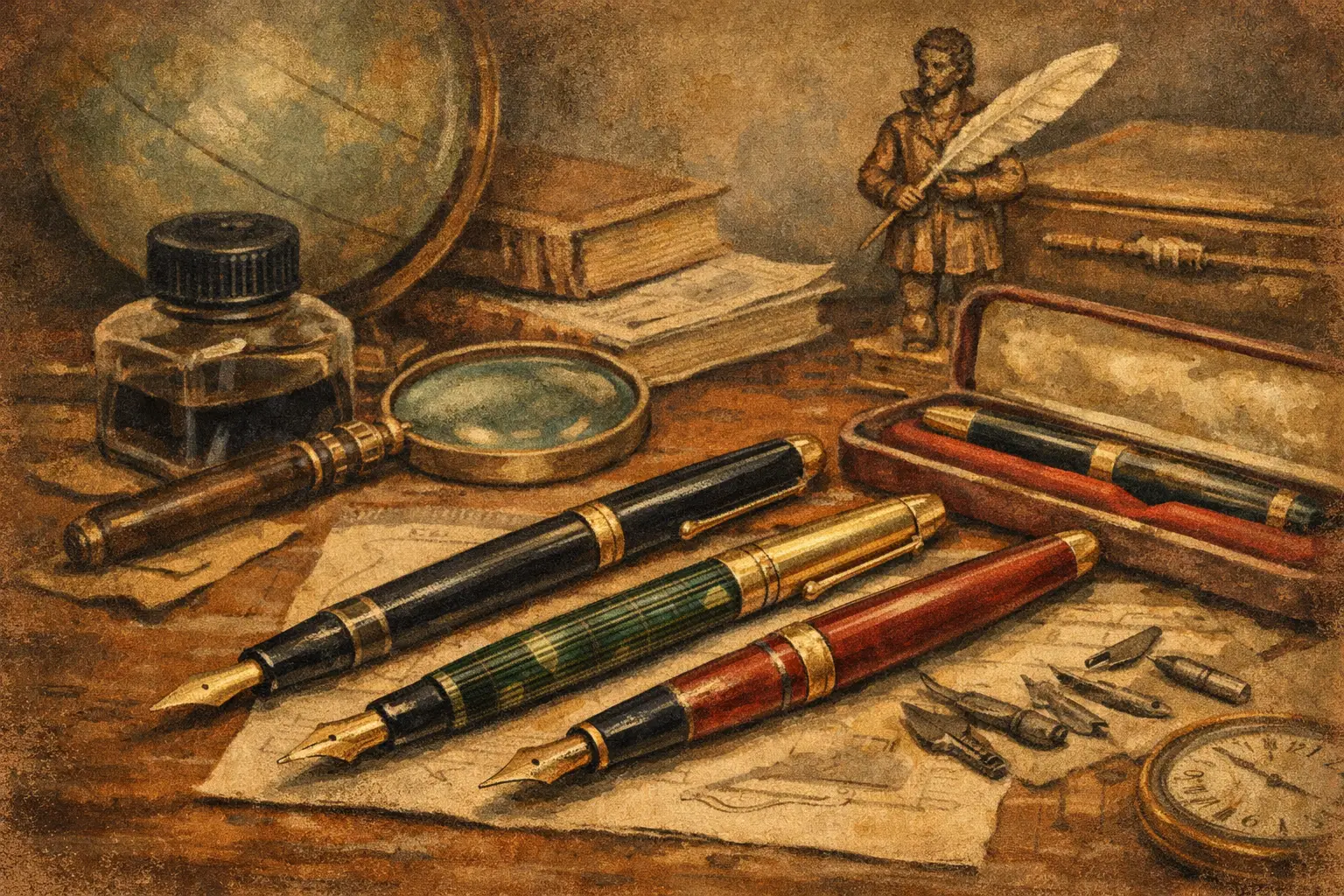
A black Parker 51 found in a drawer may be a splendid everyday writer, yet it is not automatically a high-value collectable. A first-year example in an unusual finish, complete with its correct cap and showing no careless repairs, is a different proposition. That distinction sits at the centre of the question collectors regularly ask: which pens appreciate? The honest answer is that a name on the clip is only the beginning.
Vintage pens can rise in value because they combine practical craftsmanship, design history and scarcity. They can also remain modestly priced for decades, even when they write beautifully. Buying with knowledge is therefore more useful than buying on the assumption that every old fountain pen is an investment.
Which pens appreciate most reliably?
The strongest candidates tend to be recognised models from respected makers, in original and excellent condition, with genuine scarcity behind them. Parker, Waterman, Conway Stewart, Sheaffer, Pelikan and Montblanc all have models that attract sustained collector interest, but each brand has plentiful examples alongside genuinely uncommon ones.
A pen is more likely to appreciate when several desirable qualities meet: a sought-after model, an appealing and correct finish, limited production or low survival numbers, and a sound record of originality. Collector demand must be present too. Rarity alone does not create value if few people want the object.
Early and technically significant pens often have an advantage. A first-generation filling system, an unusual nib construction, a transitional model or a design associated with a particular era can give an instrument a story that ordinary production pieces lack. Pens made in small numbers for export, special retailers or commemorative occasions may also deserve closer attention, provided their identity can be verified.
Brand matters, but the model matters more
Parker offers a useful example. The Parker Duofold remains highly collectable, particularly early hard-rubber pens, oversized sizes, uncommon colours and examples with crisp imprints. Vacumatics attract a devoted following for their laminated celluloid, elegant profile and clever filling mechanism. The Parker 51 is one of the great practical pens of the twentieth century, but its enormous production run means value is shaped sharply by condition, configuration, cap type, colour and rarity rather than age alone.
Waterman’s early eyedroppers, lever-fillers and colourfully chased hard-rubber pens occupy an important place in fountain pen history. Desirable overlays, uncommon decorative work and scarce nibs can command serious interest. A standard, heavily worn example may still be a rewarding writer, but it belongs in a different collecting category.
For British collectors, Conway Stewart has special appeal. Models in distinctive patterned celluloids, scarce sizes and desirable colours are widely pursued, especially where the imprint, trim and nib are right. A familiar model in an appealing colour can often be more desirable than a technically rarer pen in tired condition. The visual pleasure of a collection matters.
Sheaffer collectors look closely at early Balance pens, Triumph nibs, snorkel models, special finishes and factory variations. Pelikan’s striped piston-fillers, especially sought-after early models and less common colourways, have an international audience. Montblanc can command high prices, but the market demands care: condition, authenticity, correct components and documented provenance matter greatly, while replacement parts or questionable markings can undermine confidence.
Condition is where value is won or lost
An original pen with light, honest wear is usually more desirable than one that has been aggressively polished, recoloured or rebuilt from mismatched parts. Collectors inspect barrel clarity, chasing, imprints, cap bands, clip plating, trim alignment and the condition of the nib. Cracks, shrinkage, deep bite marks and corrosion are not always fatal, but they must be reflected in the price.
The nib deserves particular attention. A correct original nib with a desirable grade, flex or factory designation can materially increase a pen’s appeal. A later replacement nib may make a pen perfectly usable but less collector-grade. Equally, a nib that has been ground beyond recognition or damaged by poor alignment work will usually reduce value.
Originality does not mean that a pen must be unusable. Sac replacements, seals and carefully fitted consumable components are often necessary for a vintage fountain pen to function safely. Good restoration respects the instrument’s construction and retains original material wherever possible. It should not conceal cracks, erase history or turn a scarce pen into a polished imitation of itself.
That is why a professionally restored pen can be a more confident purchase than an untouched “as found” example. A pen that has been cleaned, serviced and tested is ready to be enjoyed. However, restoration quality matters: poor repairs, incorrect trim, crude re-saccing or excessive polishing can be expensive mistakes disguised as maintenance.
Rarity needs evidence, not wishful thinking
Collectors sometimes mistake an uncommon pen for a rare one. A pen may seem scarce simply because it was unpopular, poorly made, difficult to identify or usually discarded. True rarity is more persuasive when it is supported by known production information, period catalogues, established collector references or repeated market evidence.
Look for variations that enthusiasts consistently recognise. These may include unusual factory colours, limited overlays, rare cap bands, special nibs, export markings, early production details or documented retailer editions. Be cautious with claims such as “one of a kind” unless the seller can explain exactly why. In vintage collecting, extraordinary claims need equally solid evidence.
Boxes, instructions, receipts and period advertising can add interest, especially for higher-grade pieces. They are not a substitute for a good pen, but complete presentation can strengthen provenance and make a gift-worthy example more compelling. For historically important pens, a credible ownership history can add a further layer of reassurance.
Buy what collectors can recognise
The market rewards clarity. A pen with a clear model identity, a documented place in a respected maker’s history and recognisable collector demand is easier to value and easier to sell than an obscure novelty. This does not make lesser-known makers unworthy of collecting. Many are fascinating, beautifully made and undervalued. It simply means they may take longer to find the right buyer.
This is also where personal taste should have a place. If you enjoy bold 1930s celluloid, a Conway Stewart, Parker Vacumatic or Waterman from that period may provide years of pleasure even if its value merely keeps pace with the market. If you prefer engineering, a Pelikan piston-filler or a carefully restored Sheaffer snorkel may be more satisfying. The best collection is not built solely from future resale calculations.
Avoid paying a premium for a pen because it is described as “rare” without comparing its condition and configuration against known examples. Study the filling system, the nib, the cap and barrel markings, and whether the parts belong together. A specialist seller should be able to describe restoration work plainly and answer practical questions about how the pen fills and writes.
The value of a pen you can use
There is a quiet advantage to buying quality vintage writing instruments: appreciation is not only financial. A restored fountain pen can place the work of past makers directly in your hand. Its balance, nib character and material tell a story that a display-only object cannot.
At Heritage Collectables, we favour that combination of collector interest and proper usability. A serviced pen with sound mechanics allows you to enjoy the purchase now while preserving its long-term appeal through careful ownership. Use suitable ink, avoid forcing aged mechanisms, keep the pen clean and store it away from heat and direct sunlight.
The pens most likely to reward a collector are rarely the ones bought in a rush. Choose an example with honest condition, correct details and a design you genuinely want to write with. If its place in pen history becomes more widely appreciated over time, you will own something worth keeping either way.