
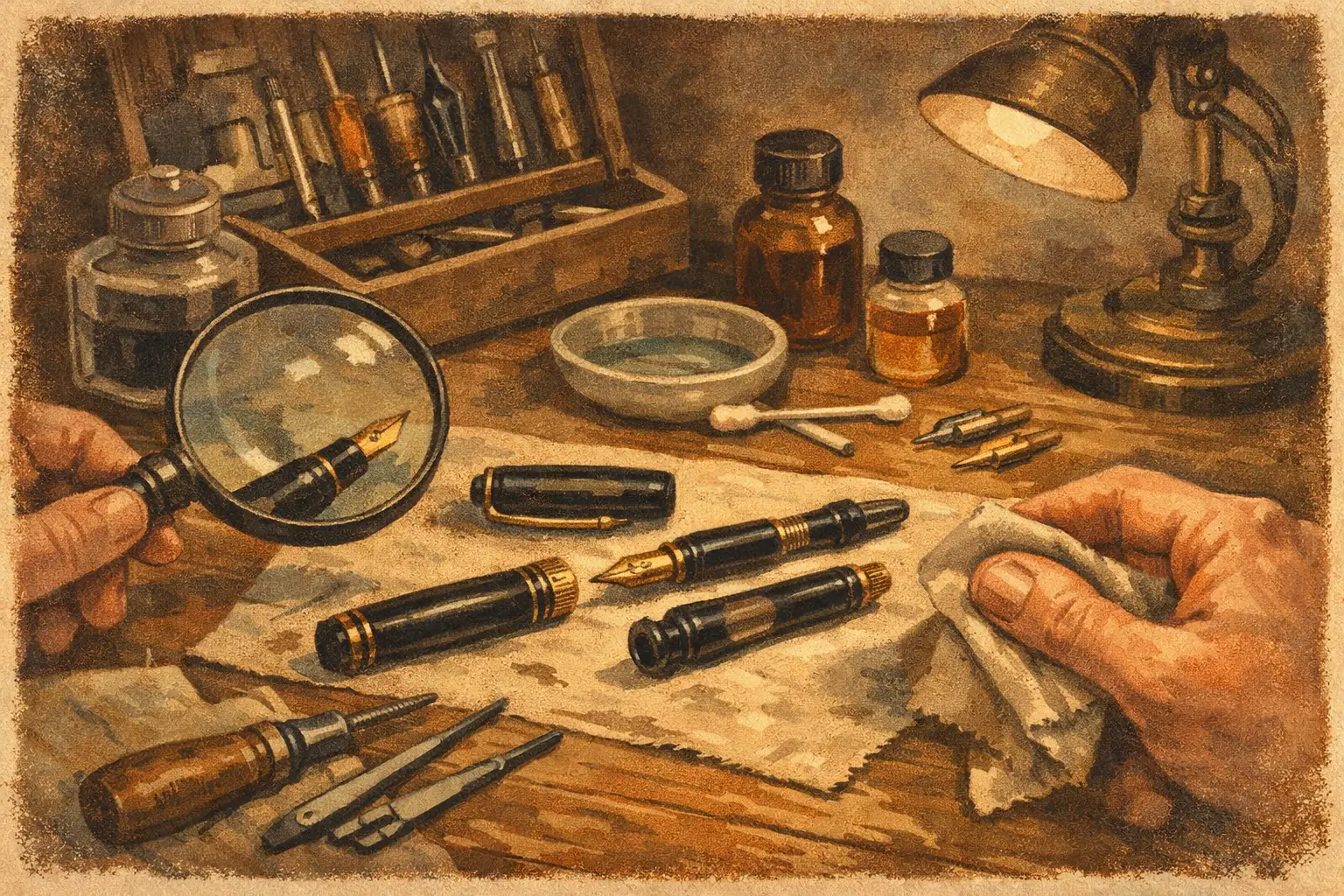
A vintage fountain pen should not have to remain a handsome but silent object in a display case. The finest examples were made to write, and thoughtful pen restoration allows that original purpose to continue without disguising the pen’s age, materials or history. For collectors, regular writers and gift buyers alike, the aim is not to make an old pen look newly manufactured. It is to make it clean, sound and dependable while respecting what makes it original.
A restored Parker Vacumatic, Waterman lever-filler, Conway Stewart or Pelikan can offer a writing experience that modern pens struggle to reproduce. Yet the quality of restoration matters greatly. A glossy photograph cannot show whether a filling system has been rebuilt correctly, whether the nib has been adjusted with a sympathetic hand, or whether a crack has been concealed rather than properly assessed.
What Pen Restoration Should Preserve
Every vintage pen carries two kinds of value. There is practical value: whether it fills, holds ink and writes comfortably. Then there is collector value: its original finish, correct trim, maker’s imprint, period features and honest signs of use. Good restoration works between these two considerations rather than favouring one blindly.
A pen with light surface marks, gentle brassing to the cap band or a little discolouration from decades of use may be more desirable than one polished until its character has vanished. Celluloid, hard rubber, casein and early acrylics all respond differently to cleaning and polishing. Removing oxidation from a hard-rubber cap, for example, can improve its appearance, but overly aggressive work may soften crisp chasing or remove material that cannot be replaced.
The same restraint applies to metalwork. A careful clean can revive a clip or cap ring, while heavy polishing may wear plating and round off engraved detail. Restoration is therefore not a single procedure. It is a series of judgements based on the pen’s construction, condition, rarity and intended use.
The Mechanical Work Behind a Reliable Writer
The part of restoration most owners never see is often the part that decides whether a pen can be enjoyed. Vintage filling systems were designed around materials with a finite life. Rubber sacs harden, cork seals shrink, diaphragm units perish and old lubricants dry out. Even a pen that appears immaculate may be unable to take up or retain ink.
A proper assessment begins with the filling mechanism. In a lever-filler, this commonly means examining the pressure bar, lever box and sac. A weak or corroded pressure bar can prevent filling even after a new sac has been fitted. In a button-filler, the button, spring and internal pressure bar require equal attention. Vacuum, piston and plunger mechanisms need a different level of specialist knowledge, as their seals, rods and threaded components can be more complex and less forgiving.
There is no universal rule that every old part should be replaced. Original components should be retained where they remain safe and functional. However, consumable parts such as sacs, seals and diaphragms are intended to do a job, not merely to survive in place. Replacing them correctly is what turns a historic instrument into one that can be inked with confidence.
Cleaning the feed and ink channels is equally important. Dried ink can form a stubborn blockage, particularly in pens that have sat unused for many years. The restorer must remove residue without damaging delicate fins, heat-sensitive materials or friction-fit sections. A pen that fills perfectly but delivers a dry, intermittent line has not been fully returned to service.
Nibs Need Judgement, Not Force
The nib is where a vintage pen reveals its personality. Many collectors seek the soft response of a Waterman flex nib, the firm precision of a Parker arrow nib, or the expressive feel of an early Conway Stewart gold nib. These qualities can be improved through careful alignment and smoothing, but they can also be lost through careless alteration.
Nib work may involve correcting tine alignment, removing a minor burr, setting an appropriate ink flow or resolving a misaligned feed. It should not mean grinding every nib into the same broad, glassy-smooth writing point. Some feedback is normal, particularly on fine nibs, and a small amount of tooth can be part of the intended writing feel.
More serious damage calls for realism. A cracked nib, missing tipping material or severely bent tine can sometimes be repaired, but the result, cost and effect on originality will vary. A rare nib may justify specialist repair; a common replacement nib may be the more sensible route for a pen intended for daily use. The right choice depends on the model and on what its next owner wants from it.
Cosmetic Restoration and the Question of Patina
Collectors often use the word ‘mint’ too freely. A pen that has spent seventy years in a drawer may have excellent colour and plating, but it is still a vintage object. Small marks, slight shrinkage in some materials and gentle wear around the cap edge can be honest evidence of age rather than defects to erase.
Cosmetic work should be proportionate. Cleaning away surface grime, restoring clarity to a translucent ink-view window and lightly polishing a dulled barrel can transform the presentation of a pen. Stabilising a crack or replacing a missing jewel may also be worthwhile when the repair is clearly disclosed and sympathetically carried out.
What should raise concern is restoration that attempts to create a false impression. Recoloured hard rubber, replated trim presented as original, over-polished chasing or undisclosed replacement parts can affect both collector confidence and value. This does not mean repaired pens should be avoided. It means their condition should be described honestly, with the buyer able to distinguish between original features, sympathetic repairs and replacement working parts.
How to Assess a Restored Vintage Pen
When choosing a restored pen, start with the practical questions. Has the filling system been serviced? Does it fill and retain ink? Has the nib been tested? Are there cracks, bite marks, significant scratches or repairs? A clear condition description is more useful than vague claims that a pen is ‘fully working’.
Then consider how you plan to use it. A scarce early model with delicate chasing may be best reserved for occasional writing and collection display. A 1950s Parker 51, a well-restored Sheaffer or a sturdy Pelikan can often make an excellent everyday companion. The best choice is not always the rarest or most pristine example. It is the one whose condition, nib character and filling system suit the role you have in mind.
For a first vintage fountain pen, uncomplicated designs can be reassuring. Cartridge-converter pens and reliable piston-fillers are straightforward for regular use, while lever-fillers offer a particularly satisfying connection with earlier penmaking. If purchasing as a gift, a serviced pen with a moderate, versatile nib and a clear explanation of its filling method is usually more welcome than an unusually delicate collector piece.
Care After Restoration
Restoration gives a pen a sound starting point, but considerate ownership keeps it writing well. Use fountain pen ink made for the purpose rather than drawing ink, Indian ink or calligraphy ink with shellac. Flush the pen when changing colours and before a long period of storage. Do not leave ink to evaporate inside a pen for months, particularly in models with intricate feeds or vintage sac systems.
Keep pens away from strong sunlight, radiators and damp conditions. Heat can distort celluloid and damage seals; sunlight can fade vulnerable colours; moisture can affect metal components and presentation boxes. Caps should be removed and posted only when their design permits it, as forcing a cap onto the barrel can cause damage to fragile materials.
For pens with a sac filling system, it is sensible to accept that servicing may eventually be needed again. This is not a failure of restoration. Rubber components are working parts, and their lifespan is influenced by ink choice, storage and frequency of use. A pen that is used and cared for is often easier to maintain than one left forgotten in a drawer.
A Restored Pen Has a Second Working Life
The pleasure of vintage writing lies partly in the knowledge that these instruments have already travelled through another era. A restored pen may have recorded letters, signatures, sketches or private thoughts long before it reached its next owner. Its small marks and individual writing character are not inconveniences to be engineered away. They are part of the appeal.
At Heritage Collectables, restored vintage writing instruments are selected with this balance in mind: collector interest, honest condition and practical usability. Whether you are seeking a dependable daily writer, a particular maker for a growing collection or a distinctive gift, choose a pen whose restoration respects the past while inviting you to put ink to paper again.