
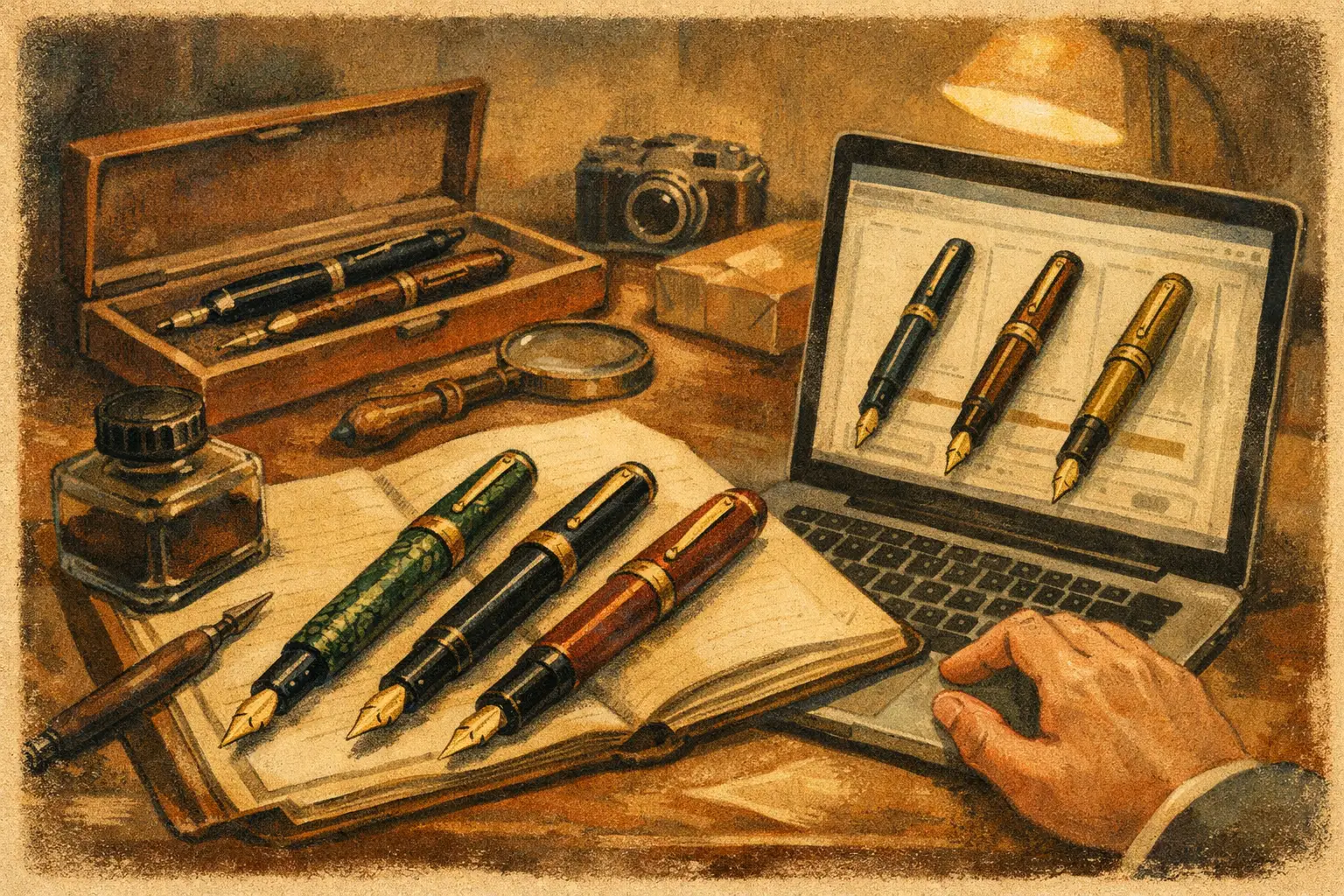
A vintage fountain pen can look immaculate in a photograph yet be unusable at the writing desk. A hardened sac, a distorted nib, missing cap threads or an untested filling system can turn an exciting find into a repair project. That is why buying restored writing instruments online calls for more than an eye for a handsome barrel or a familiar clip.
The right purchase brings together design history, careful restoration and the simple pleasure of a pen or pencil that performs as it should. Whether you are seeking a Parker Duofold, a Waterman lever filler, a Conway Stewart in a favourite colour, or a well-made propelling pencil, the details behind the listing matter.
What “restored” should mean
Restoration is not merely polishing a pen until it shines. A good vintage instrument should retain its period character while receiving the work needed to make it dependable in normal use. The exact process varies with the instrument and its age, but it begins with an assessment of condition rather than a one-size-fits-all treatment.
For a vintage fountain pen, attention may be given to the filling mechanism, sac or diaphragm, seals, feed, section, cap and barrel threads. The nib should be examined for alignment, tipping condition and smooth ink flow. A lever filler, button filler or piston mechanism has its own requirements, and a proper restoration respects how that particular model was designed to work.
With vintage pencils, the mechanism deserves equal scrutiny. Does the propel-and-repel action operate correctly? Does the clutch grip the intended lead size? Is the nose cone secure? A pencil can be a small mechanical marvel, and its value lies as much in reliable operation as in its engine-turned finish or decorative cap.
There is a sensible balance to strike. Collectors may prefer light cosmetic evidence of age if the material is sound, while gift buyers might favour a cleaner presentation. Excessive polishing can soften crisp chasing, remove plating or make an old pen look less honest. Good restoration preserves rather than disguises.
Buying restored writing instruments online with confidence
An online listing cannot replace holding a pen, but it can give you enough information to make an informed decision. Start with clear, well-lit photographs from several angles. Look closely at the cap lip, barrel, section, clip, imprints and trim. These are the areas where cracks, plating loss, brassing and previous repairs often reveal themselves.
Descriptions should be equally specific. “Vintage” is not a condition report. A useful description identifies the maker and model where possible, gives approximate dating, records dimensions, explains the filling system and states what restoration or testing has been carried out. It should also distinguish between minor cosmetic wear and a meaningful flaw.
The wording around the nib deserves particular attention. Nib grades are not entirely standardised, especially after decades of use and possible adjustment. A medium nib may write closer to fine, broad or even cursive depending on the maker, period and hand that has shaped it. If writing performance is central to your purchase, choose a seller who tests the pen rather than assuming that an attractive nib will write well.
It is also worth considering how you intend to use the instrument. A rare, early hard-rubber pen may suit a collection or occasional correspondence, whereas a restored Parker 51, Sheaffer or Pelikan may be the better choice for regular notes and journalling. The best pen is not always the rarest one. It is often the one whose weight, filling method and nib character encourage you to reach for it.
The questions that separate a good listing from a gamble
Before placing an order, read beyond the headline. You are looking for evidence of knowledge, not inflated claims of rarity. A specialist should be able to describe the practical condition of the piece in plain terms.
Ask whether the pen has been serviced and ink tested, whether it takes bottled ink or cartridges, and whether any marks or repairs are visible. For a pencil, ask about lead size and mechanism function. If a case, inkwell or pen stand is included, establish whether it is original to the item or a later companion piece. Neither is automatically a problem, but accuracy protects both buyer and seller.
Provenance can be valuable, especially with scarce models, limited editions and important makers. Yet condition, originality and function still matter. An instrument with a strong family story but a compromised barrel should be priced and described accordingly. Conversely, a sound restored pen without dramatic provenance may offer far greater satisfaction at the desk.
A clear returns policy is another mark of reassurance. Vintage pieces are individual, and even an excellent description cannot predict every preference in weight, balance or nib feel. The ability to inspect a purchase properly, within sensible terms, makes buying at a distance less uncertain.
Choose by maker, mechanism and era
Recognised names provide a useful starting point, but they should not be the only route through a collection. Parker, Waterman, Sheaffer, Conway Stewart, Montblanc and Pelikan each offer rich histories and distinct design languages. Within a single maker, however, the experience can differ greatly between decades and models.
A 1920s Waterman may appeal for its chased hard rubber and flexible gold nib, while a mid-century Parker may offer a more streamlined shape and practical everyday filling system. Conway Stewart attracts collectors with its British materials and colourways. Pelikan piston fillers have long been appreciated for their ink capacity and engineering. The right direction depends on whether you are building a focused collection, looking for a daily writer or choosing a meaningful gift.
Do not overlook accessories and related pieces. A period inkwell, pen rack, writing case or boxed pencil can give a collection more context. Victorian dip pens and nibs offer a different kind of writing experience altogether: expressive, deliberate and rewarding, but not as convenient as a self-filling fountain pen. Ink choice matters too. A gentle, well-behaved ink is usually kinder to a vintage instrument than heavily saturated or shimmering formulations.
Why specialist restoration is worth seeking out
Vintage writing instruments are made from materials that reward experience. Celluloid, casein, hard rubber, ebonite, early plastics and plated metal all age differently. A repair suitable for one material may be harmful to another. Heat, solvents, polishing compounds and adhesives must be used with judgement, particularly on scarce or fragile pieces.
That expertise also helps preserve originality. Replacement parts are sometimes necessary for function, but they should not be passed off as original. A sympathetic restoration records the nature of the work and avoids needless alteration. For collectors, this is part of the object’s integrity. For writers, it is the assurance that a pen has been prepared for use without sacrificing what makes it historic.
At Heritage Collectables, the appeal of a restored instrument lies in this meeting of past and present: a pen or pencil chosen for its character, carefully prepared and ready for its next owner. Stock changes regularly, which is one reason experienced collectors return often when searching for a particular colour, model or nib.
Give yourself room to choose well
Photographs can make every vintage pen seem equally desirable, so narrow the field before you buy. Decide whether you want a fountain pen, ballpoint, pencil or dip pen; whether it is for display, daily writing or a gift; and what level of cosmetic wear you are comfortable with. A budget should include ink, a suitable pouch or case, and perhaps future servicing for a piece you intend to use heavily.
Patience is useful when searching for a specific instrument. The most desirable examples are not always available at once, and settling for the wrong colour, nib or condition can prove more expensive than waiting. Make a wish list, check new arrivals and compare examples until you recognise the features that matter most to you.
A restored vintage pen is not simply an old object that happens to write. It is a piece of design made active again, with marks of its own era and a practical place in yours. Choose the one that makes you want to put ink to paper.
2 thoughts on “Buying Restored Writing Instruments Online”