
A vintage pen can look splendid in a photograph and still disappoint the moment it reaches paper. The trim shines, the barrel catches the light, and then the nib scratches, the lever feels loose, or the filler gives up after two turns. That is why knowing how to spot pen restoration quality matters so much. For collectors, writers, and gift buyers alike, the difference between a merely polished pen and a properly restored one is the difference between ornament and instrument.
A good restoration respects the pen’s history while making it dependable in the hand. That sounds simple, but it requires judgment. Some pens should retain honest signs of age. Others need more extensive work to become usable again. The best result is rarely the flashiest one. It is the one where the pen looks right, feels right, and works as its maker intended.
How to spot pen restoration quality before you buy
The first thing to look for is not shine but coherence. A well-restored pen presents as a complete object. The cap and barrel should match correctly in colour, material and period. The trim should make sense for the model. The clip should sit properly. Threads should engage cleanly. If something looks slightly off, it often is.
This matters because poor restoration sometimes hides in plain sight. An overly buffed barrel may look glossy online, yet the chasing, imprints or crisp edges have been softened away. Replacement parts may be functional but incorrect for the model. A nib may fit physically while being wrong in size, era or brand. Experienced restorers know that originality and usability must be balanced, not confused.
When reading a listing or handling a pen in person, ask yourself a practical question: what, exactly, has been restored? A trustworthy seller will usually be clear. If the sac has been replaced, if the piston has been serviced, if the nib has been aligned and tested, that is meaningful information. Vague phrases such as “in good condition” or “writes well” tell you very little on their own.
The nib tells you most of what you need to know
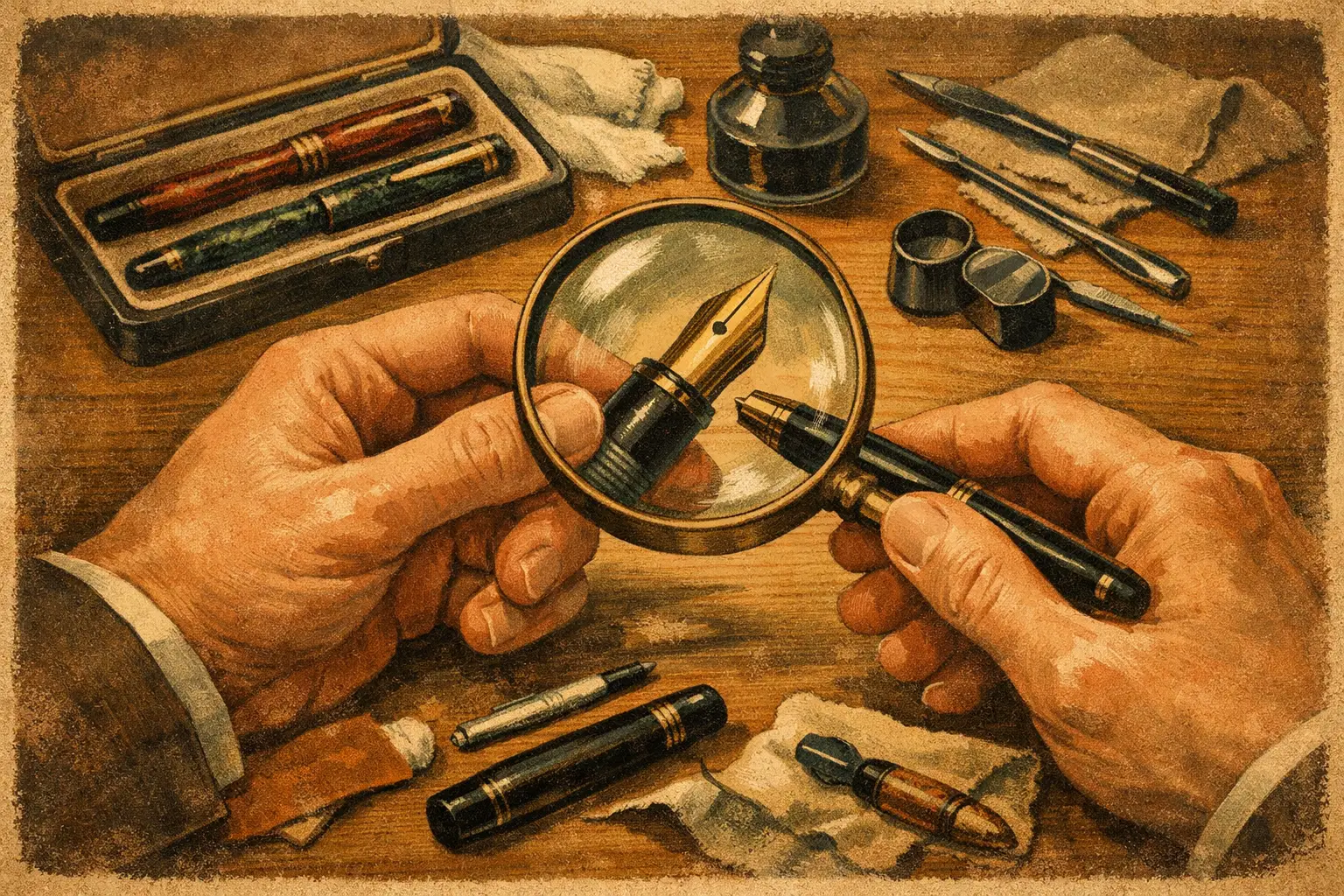
If the nib is the heart of the pen, restoration quality is easiest to judge there. Start with alignment. The tines should sit evenly, with no obvious crossing or vertical mismatch. Under light, the tipping should look symmetrical enough to suggest a deliberate writing surface rather than one worn into an awkward shape.
Then consider the fit. On a fountain pen, the nib and feed should sit securely and centrally. A slight variation can be normal on some models, but a crooked nib, gaps between nib and feed, or signs of force around the section suggest rough handling. Good restoration is careful work. It does not leave visible stress marks where parts have been levered apart without proper technique.
A well-restored nib should also suit the pen. Vintage pens are often found with substituted nibs, and sometimes that is a sensible repair if the original was beyond saving. Still, the seller should say so. For a collector, originality may matter greatly. For a daily writer, performance may matter more. Neither priority is wrong, but quality restoration means being honest about the difference.
Writing performance is the final test. A properly restored pen should start without drama, maintain flow, and feel consistent across normal writing angles. Vintage nibs vary enormously, and some feedback is perfectly appropriate. Flex nibs, in particular, require a lighter hand and realistic expectations. Even so, there is a difference between character and fault. Railroading, hard starts, baby’s bottom, severe scratchiness and unreliable flow are not charming vintage traits. They are problems.
Filling systems should work smoothly, not just once
Many disappointing restorations are revealed by the filling system. A pen may write for a quick dip test and still fail as soon as the reservoir is used properly. Lever fillers should operate with controlled resistance, not with a worrying slackness or a harsh, crunchy feel. Button fillers should depress and recover correctly. Pistons should move smoothly without graunching, sticking or uneven travel. Vacuum and plunger systems should seal and fill as designed.
Inside the pen, unseen work matters. Fresh sacs, sound seals, correctly greased piston mechanisms and clean internal passages are what make a restored pen usable rather than decorative. You may not be able to inspect these directly before purchase, but a specialist seller should be able to describe the work with confidence.
There is also a time element here. A poor restoration may seem fine on arrival and fail weeks later because the wrong sac material was used, the pressure bar was left tired, or the piston seal was improvised rather than properly fitted. Quality restoration is not just about getting ink into the pen today. It is about giving the pen a fair working future.
Surface finish: beware pens that are too perfect
Collectors often learn this lesson the expensive way. A highly polished vintage pen can be less desirable than one with gentle wear. Hard rubber that has been aggressively cleaned may lose its depth and definition. Celluloid can be over-buffed until the edges soften and the pen loses the crisp geometry that gave it character in the first place.
Good cosmetic restoration improves presentation without erasing history. Light micro-scratches may be reduced. Tarnish may be removed from trim where appropriate. Dirt and oxidation may be treated carefully. But the aim is sympathetic conservation, not making a 1930s pen resemble a modern replica.
Look closely at cap bands, clips, imprints and chased patterns. These details should remain sharp. If branding is weak or nearly polished away, that tells you too much material may have been removed. Likewise, if black hard rubber looks oddly brownish or flat, restoration may have crossed into damage control rather than preservation.
Correct parts matter more than many buyers realise
A pen restored with incorrect parts may still write well, but it is not the same thing as a well-restored original example. This is especially relevant with cap tops, jewels, clips, blind caps, feeds and nibs. On some models, one wrong component changes both collector value and visual balance.
That does not mean every replacement part is unacceptable. Vintage restoration often involves sensible compromise, particularly when original parts are scarce. The key point is disclosure. A reputable specialist will tell you if the nib is a period replacement, if a cap band has been sympathetically replaced, or if a pencil mechanism includes a later component. The quality lies not only in the repair itself but in the honesty around it.
For buyers who intend to use rather than display the pen, these choices may be entirely reasonable. A carefully fitted replacement feed that improves reliability can be a very good outcome. It depends on whether you are buying for strict originality, daily writing, gifting, or a mixture of all three.
Signs of a seller who understands restoration quality
The pen matters, but so does the person selling it. Strong listings tend to be specific. They mention the filling system, nib grade, restoration carried out, visible marks, and any non-original parts. They do not hide behind flattering angles or vague assurances.
Photographs should show the nib clearly, not just the barrel shine. You want to see the imprint, trim condition, cap lip, section and any areas where cracks commonly occur. If a seller avoids these views, caution is sensible.
It is also worth considering whether the seller treats restoration as a specialist discipline or as an afterthought. A dealer focused on vintage writing instruments will usually understand the difference between cleaned, serviced and fully restored. At Heritage Collectables, that distinction matters because buyers are not simply purchasing old pens. They are buying writing instruments expected to perform.
How to judge value alongside quality
Restoration quality affects price, but not always in the way newcomers expect. An untouched pen in original condition may be worth more to a specialist collector than a heavily refinished example. Equally, a professionally restored writer can be better value than a cheaper pen that still needs substantial work.
The sensible question is not whether a restored pen costs more. It is whether the restoration has been done to a standard that supports the asking price. If the nib is tuned, the filler rebuilt, the cosmetics sympathetically handled, and the description transparent, a higher price is often justified. If the pen is merely bright and vaguely described, it may be expensive at any figure.
For gifts, reliability usually outweighs minor originality concerns. For collecting, provenance and correct parts may take priority. For daily use, writing performance and filling integrity should sit at the top of the list. Restoration quality always matters, but the right standard depends on what you want from the pen.
The best vintage pens still have one great advantage over many modern ones: they carry history into everyday use. A careful restoration preserves that pleasure rather than faking it. When a pen writes cleanly, fills properly, and still looks honest to its age, you are not just buying a vintage object. You are buying craftsmanship that has been given another proper working life.
3 thoughts on “How to Spot Pen Restoration Quality”